






By Josefina Staudenmaier, Santiago Crippa, and Lucas Gallucci — Product & Experience Team at Zerenly
When we analyzed Zerenly’s metrics (a mobile app designed to support emotional and mental well-being) a clear pattern emerged: people would arrive, log how they were feeling, explore the AI-generated analysis… and then not return as often as expected.
Emotional logging worked as an entry point (especially for women, who represent close to 80% of users), but something was getting lost along the way. The experience fulfilled its initial purpose, yet it struggled to sustain the relationship over time.
That’s where the question that shaped all subsequent work appeared: how do you improve user retention in an emotional well-being app without forcing usage or increasing friction? The answer wasn’t about pushing more interactions, it was about creating a deeper, more meaningful connection.
When retention starts with purpose
The first learning was conceptual: we couldn’t think about retention as a problem detached from the meaning of the experience itself. If Zerenly aimed to support real emotional processes, it needed to go beyond a short, purely functional journey.
So we moved away from a linear flow (log an emotion and receive an analysis) and started asking what kind of mark that moment in the app actually left. The goal wasn’t for people to come back every day, it was for them to want to come back because something had resonated.
That shift in perspective marked the beginning of a deeper redesign.
Redesigning the emotional flow: from logging to reflecting
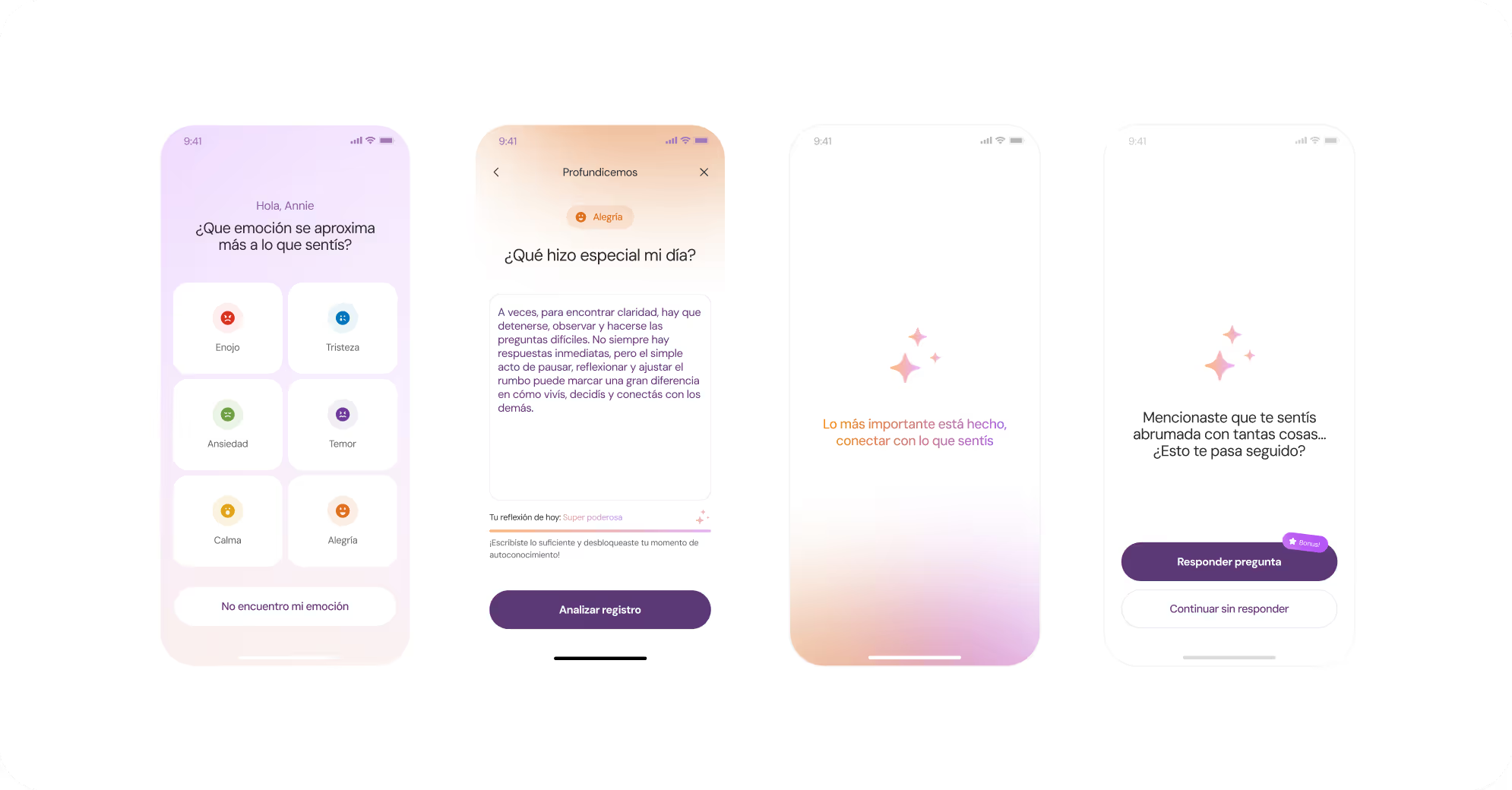
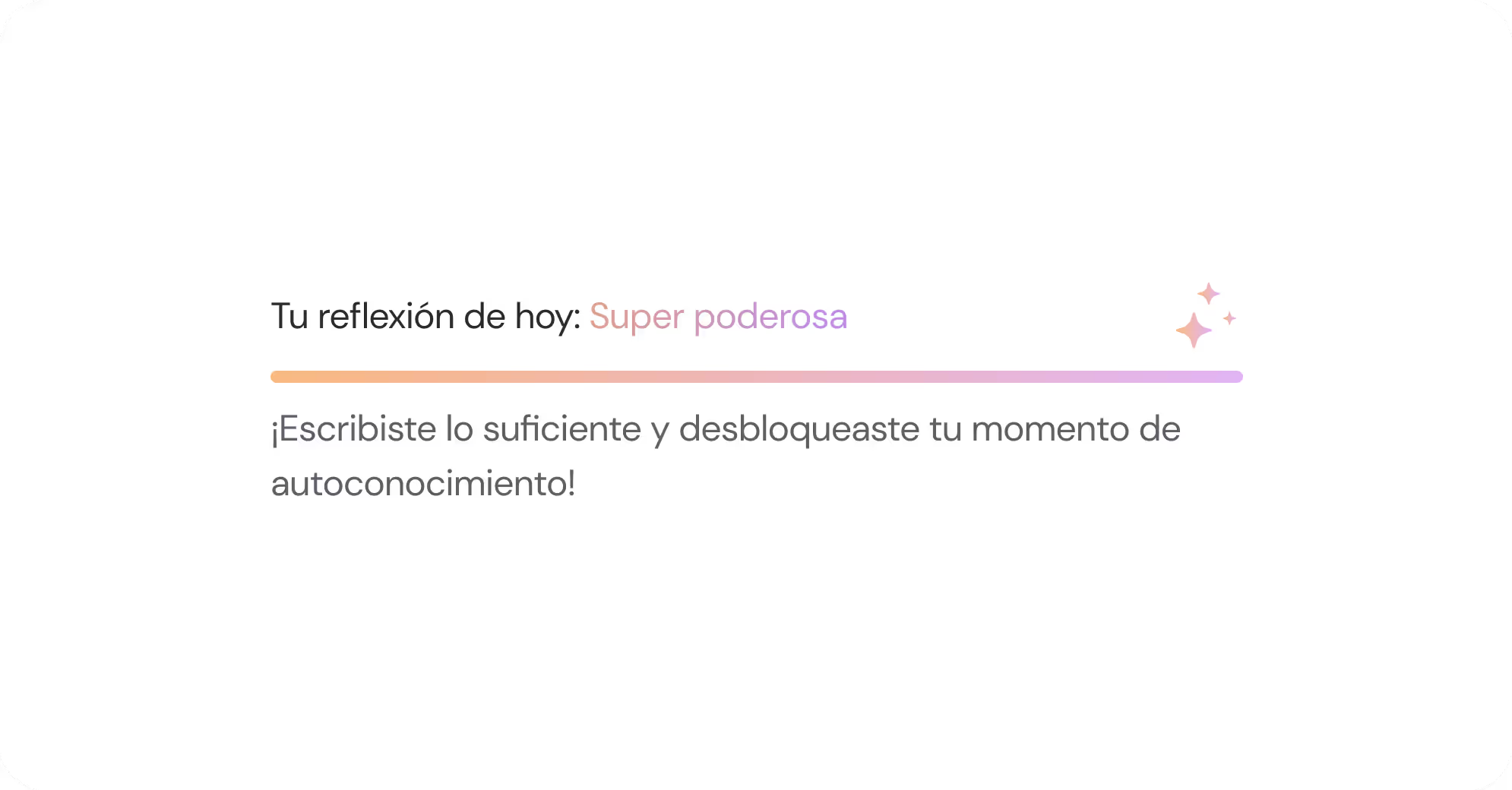
The new journey introduces a turning point: a personalized follow-up question. A brief, empathetic, carefully designed intermediate step that transforms the experience.
After selecting the emotion, the sub-emotion, and describing what they went through, the app poses a question that invites deeper reflection. It doesn’t seek an immediate answer or demand action. Its role is different: to accompany, validate, and leave the user thinking.
This seemingly simple adjustment realigned the product with Zerenly’s original purpose: helping people better understand what they’re feeling, without staying on the surface of logging.
The follow-up question as a tool for self-knowledge
The follow-up question is inspired by principles of ontological coaching, where open-ended questions act as triggers for reflection. Each one is written with intention and care, prioritizing warmth, clarity, and respect for the user’s emotional moment.
Some examples that emerged during internal testing:
- “What do you think is behind the feeling of discomfort you’re experiencing?”
- “What would you like to change in your work environment to feel more comfortable at the start of your day?”
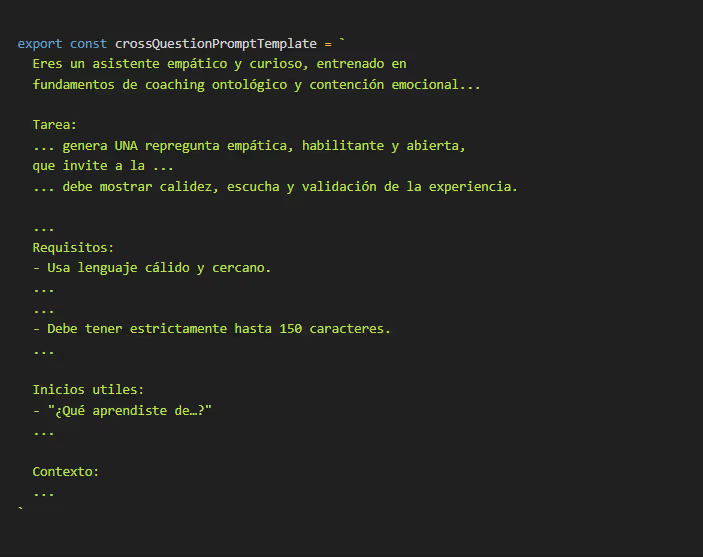
These questions are generated through an artificial intelligence model that receives relevant context (emotion, description, age, gender, and other data) and operates based on a strategically designed prompt. That prompt defines tone, boundaries, and interaction goals, and became one of the most critical pieces of the entire flow.
Integrating AI without losing humanity
Adding this step came with real technical challenges. Introducing a new instance into a flow that was already working meant answering key questions:
When is the follow-up question generated?
- How is it presented without interrupting the experience?
- What happens if the model fails?
- How are emotional data integrated without losing coherence?
The solution was to design an emotional middleware: an endpoint that receives the full log and returns the generated question, keeping the architecture clean, testable, and ready to iterate.
In addition, each step stores valuable information (emotion, sub-emotion, description, question, and potential response), enriching later analysis and allowing us to learn from real usage.
The prompt as the strategic core of the experience
AI behavior depends largely on how it’s guided. That’s why the prompt was crafted with special care: it defines tone, length, the type of question, and (above all) the role the AI should play.
This isn’t about “interpreting” or “advising,” but about accompanying without intruding. A poorly defined prompt can break the experience; a well-built one sustains brand identity and reinforces purpose.
In this case, the prompt ensures that every question conveys containment, curiosity, and coherence with Zerenly’s mission.
Microinteractions that reinforce the emotional bond
Beyond content, we wanted the moment to feel special. So we incorporated visual microinteractions: loading states with moving gradients, subtle glows, and small gestures that signal something is happening.
These animations were created in Jitter and exported in Lottie format, allowing for lightweight, fluid integration without affecting performance. They’re not decorative, they emotionally accompany the waiting moment.
Language as a bridge, not a barrier
Zerenly has always prioritized an empathetic, close tone, aware that many people arrive in moments of vulnerability. For this new flow, we ran an internal workshop to explore how to ask, name, and accompany without pressure.
The result was language that invites reflection without demanding it, that holds space without overprotecting, and that respects each person’s emotional timing. Not everything is artificial intelligence, words remain the primary bridge.
Results, learnings, and what’s next
Beyond metrics, this process helped us reconnect with the product’s reason for being. We learned that retention isn’t measured only in sessions, but in the resonance you leave behind.
Today, we know that a well-crafted question can spark an internal shift. And if someone returns because they felt accompanied, the goal has been met.
At Paisanos, the work continues with A/B testing to measure impact on discovery quality, relationship with the app, and real retention. But one thing is already clear: technology, when designed with intention, can create more human experiences.
Because in the end, it’s not just about logging an emotion. It’s about feeling that someone (or something) is listening, and leaving you with something to think about.
Get the full story behind how we redesigned retention for Zerenly here.
This content was created by Josefina Staudenmaier, Santiago Crippa, and Lucas Gallucci, part of the team dedicated to designing and improving the Zerenly experience, united by the belief that technology can be a bridge to a more genuine connection with how we feel.
Questions (and answers) about retention and AI
How do you improve retention in an emotional well-being app?
Improving retention means creating experiences that resonate emotionally. More than adding features, it’s about designing purpose-driven journeys, empathetic language, and reflective moments that invite users to return without forcing usage.
What role does AI play in Zerenly?
AI acts as a facilitator of personalized questions that accompany the emotional process. It doesn’t interpret or advise, it proposes brief reflections that deepen the experience without intruding.
Why can a follow-up question increase engagement?
Because it turns a mechanical action into a meaningful experience. A well-formulated question validates what the user is feeling and leaves a mark that motivates return.
What are emotional microinteractions in UX?
They’re small visual gestures or animations that accompany key moments in the journey. When used well, they reinforce emotional connection without distracting or overloading the interface.