










By Leo Suárez — Head of Design at Paisanos and Fer Benito — Brand Strategy Director at Paisanos
Leo leads product and identity design processes for scaling technology companies. Fer works with organizations to define brand territories and strategic architecture. Both collaborated closely with the Coderhouse team to redefine its identity.
Updating a brand identity is rarely a graphic problem. It’s a synchronization problem.
When a company evolves (its product matures, its community grows, its business model expands) the brand can fall out of alignment. That’s when the usual conversation begins: “we need a refresh,” “a new logo,” “something more modern.” But what’s really at stake isn’t aesthetics. It’s whether the identity still reflects what the company truly is, and where it’s headed.
In Coderhouse’s case, the challenge wasn’t to look different. It was to remain recognizable while both the product and the learning experience evolved. This article explains how we moved from the product roadmap to a solid brand territory, and what it takes to build an identity designed to scale without losing coherence.
Branding and Product: Why they can’t evolve separately
In tech and education companies, one of the most common mistakes is decoupling brand and product.
Sometimes the brand runs ahead: a powerful aspirational narrative is crafted, but the product can’t sustain the promise. The result is friction. According to the Edelman Trust Barometer (2023), trust erodes quickly when the experience doesn’t match what’s communicated.
Other times, the opposite happens: the product evolves (new features, new audiences, new formats) but the identity remains anchored in a previous stage. The brand starts describing a version of the company that no longer exists.
There’s also a third trap: waiting until the product is “finished” to work on the brand. In digital environments, a product is never truly finished. Wait too long, and the identity becomes a collection of tactical decisions without strategic direction.
In projects like Coderhouse, the right approach is different: brand and product must be designed as parts of the same system, with the roadmap on the table from day one.
The brand shouldn’t freeze evolution or run ahead of it. It should make it legible.
Before Design: Understanding Business, Roadmap, and Community
The strategic phase wasn’t decorative groundwork. It was the foundation.
We organized three layers that are often blurred when discussing identity:
- Business direction: the stage the company was in and the ambitions it aimed to sustain.
- Product roadmap: how the real experience would evolve in the coming years.
- Culture and community: existing codes, expectations, and the emotional bond that needed to be preserved.
With that clarity, the conversation shifts. Branding stops being about shapes and colors and becomes a more demanding question:
What kind of company does Coderhouse want to be in the coming years, and what can it promise without creating brand debt?
Because there’s a structural rule in branding: if you promise what the product can’t deliver, you’re not being aspirational, you’re accumulating distrust.
What a Brand Territory is, and why It matters in Tech companies
More Than a Tagline: An Operational Space
When we talk about brand territory, we don’t mean an inspiring phrase. We mean a strategic framework from which consistent decisions can be made.
A well-defined territory allows you to answer questions like:
- Is this message aligned with our direction?
- Does this new product fit within our narrative?
- Does this tone strengthen our relationship with the community?
- Can this visual system scale without losing identity?
In saturated categories like online education or technology, differentiation doesn’t come from excess creativity, it comes from sustained coherence.
The Criteria We Used to Define the Territory
To choose the right territory, we applied concrete filters:
- Alignment with future business strategy, not just the present.
- Ability to be sustained by the real product.
- Resonance with the existing community.
- Potential to become a scalable verbal and visual system.
- Genuine differentiation from competitors.
That evaluation wasn’t sequential. It was conversational.
Strategy and Design: From Linear Model to Iterative Process
In many projects, strategy delivers a document and design executes it. That model often produces identities that feel abstract or decorative.
In this case, we worked iteratively. Strategy provided direction and boundaries. Design turned those ideas into tangible material, stressed them, and sent questions back.
Design doesn’t just represent strategy, it tests it.
A concept is solid when it can become a system. When it works across a landing page, an interface, a campaign, transactional communication, and in what doesn’t yet exist.
That back-and-forth ensured the final identity wasn’t just inspiring, but operational.
The “Horizon” concept: Identity aligned with evolution
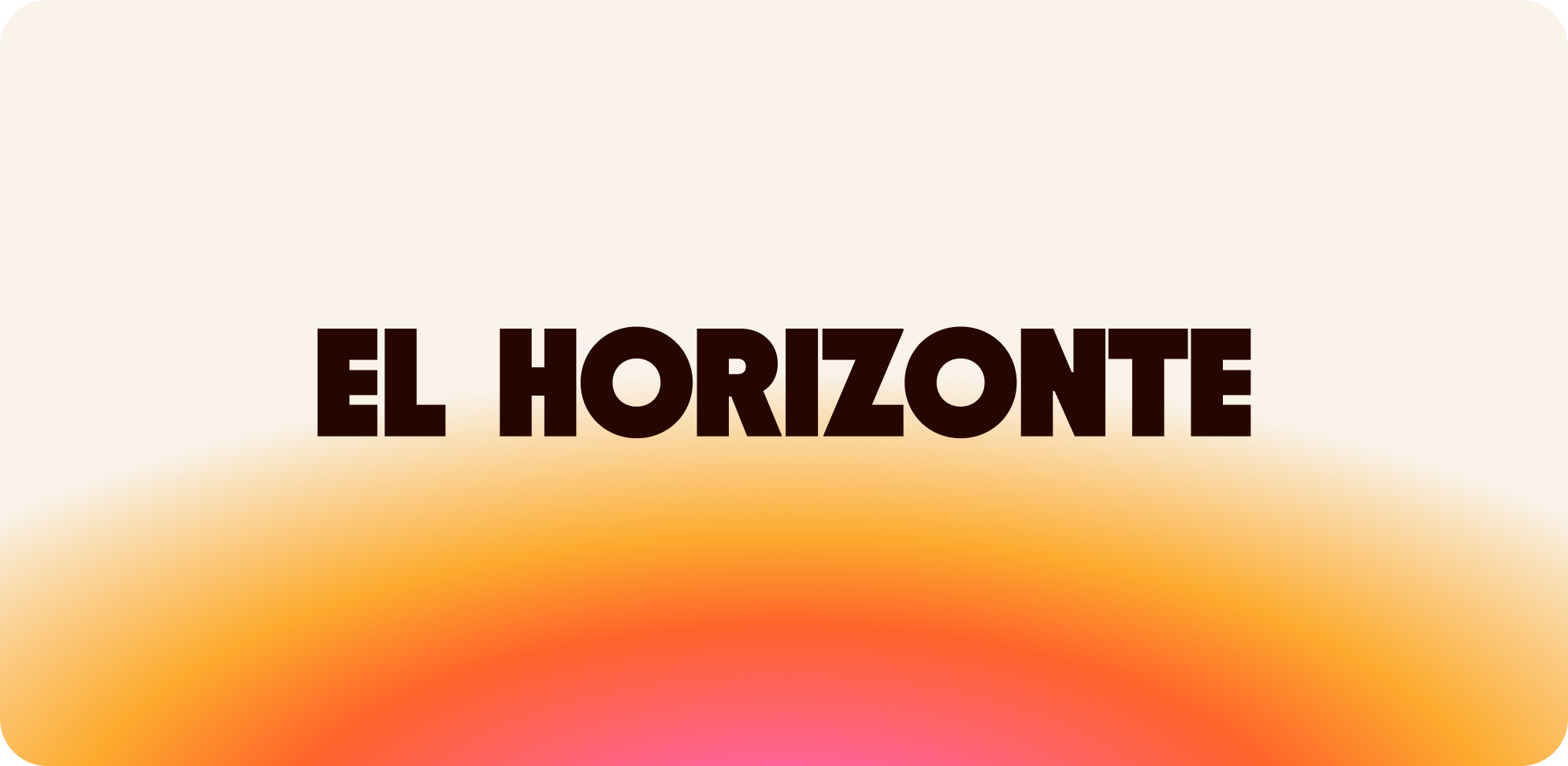
From that shared work emerged a conceptual framework that the Coderhouse team named The Horizon.
Not as an isolated metaphor, but as a behavior. Coderhouse isn’t a destination; it’s a continuous process of learning and evolution. A brand that accompanies trajectories, and transforms along the way.
What mattered strategically wasn’t the phrase. It was its coherence with the product roadmap and future ambition.
“The horizon is never reached. It’s pursued”.
That idea helped organize tone, visual system, and narrative decisions without forcing the identity into a place the product couldn’t sustain.
From Concept to System: Identity as scalable infrastructure
A technology brand doesn’t live only in a logo. It lives in:
- Interfaces
- Product communications
- Campaigns
- Content
- Events
- Internal systems
- New products that don’t yet exist
So the work wasn’t about “redesigning a symbol.” It was about building a system capable of sustaining three variables simultaneously:
- Recognition: clarity and memorability in dynamic digital environments.
- Flexibility: the ability to adapt to new formats and verticals.
- Consistency: clear rules that different teams can apply without breaking the identity.
When identity functions as infrastructure, the brand stops depending on isolated standout pieces and starts enabling real growth.
In digital contexts where expansion is constant, identity must anticipate movement.
What We learned: From Refresh to Brand Architecture
This project reinforced something we see often in technology companies: effective branding doesn’t begin with aesthetics. It begins with strategic direction.
When strategy, product, and design operate as parts of the same mechanism, identity stops being surface treatment and becomes architecture.
In a market where many brands compete to look current, building a distinct territory is what allows you to evolve without losing yourself.
The horizon is never reached. It’s pursued. And when well designed, identity works the same way.
Frequently Asked Questions About Strategic Branding and Brand Territory
What is a brand territory in strategic terms?
A brand territory is a conceptual and operational framework that defines from where a company communicates and acts. It’s not just a tagline or slogan, it guides tone, narrative, visual decisions, and product behaviors, enabling coherence and scalability.
Why must branding align with the product roadmap?
Because a brand communicates a promise. If that promise isn’t supported by the product’s real evolution, friction and loss of trust follow. Identity must accompany (and clarify) strategic direction.
What’s the difference between a visual refresh and a strategic brand redefinition?
A visual refresh updates existing graphic elements. A strategic redefinition revisits positioning, narrative territory, and system architecture to align the brand with business evolution.
How do you know when a company needs to redefine its identity?
When the product evolves, the target audience expands, or strategic ambition shifts, but the identity still represents a previous stage. That misalignment often shows up as inconsistencies in communication or experience.