Description
The challenge
The impact
Impact in numbers


The World Cup always gives us a reason to come back: to hang the flag from the window, get together with friends, and believe in things we normally wouldn’t for another four years, like a lucky jersey or that one ritual that somehow helps the team score.
And Mostaza wanted burger fans to keep coming back to its app.There couldn’t have been a better time to make it happen.
Go to case details to know more
The World Cup was the starting point, but it was never the whole idea.
Mostaza’s app had already been on the market for some time and worked well, but only as a transactional tool: browse, order, pay, done. That was where the journey ended. Unless users were hungry or happened to pass by a Mostaza location, the app was rarely their first choice.
The challenge seemed technical, but underneath it was something emotional: how could we make people want to open the app even when they weren’t hungry yet?
The answer wasn’t to advertise around the World Cup. It was to build something with a reason to exist between matches, and between purchases.
Go to case details to know more
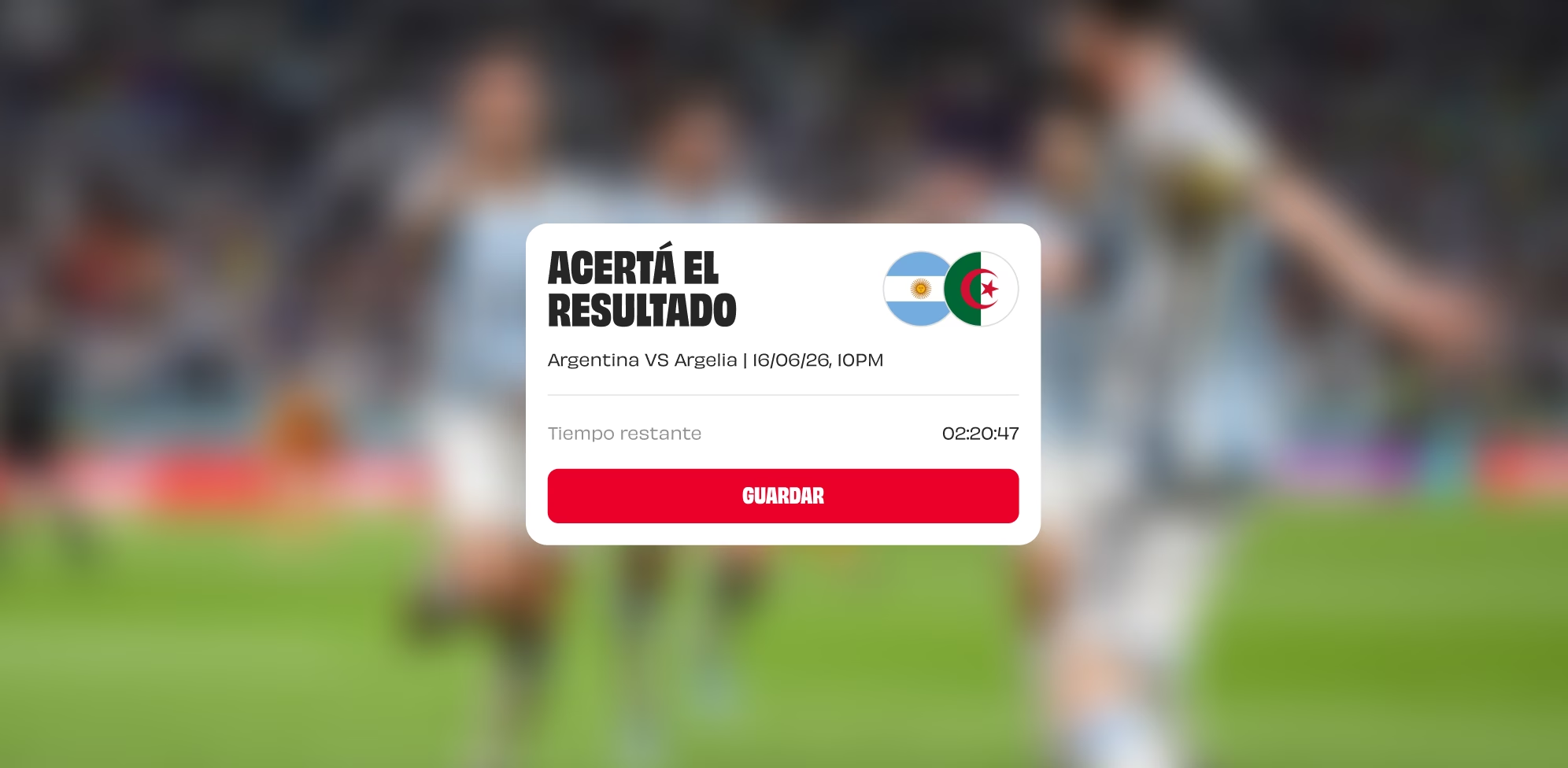
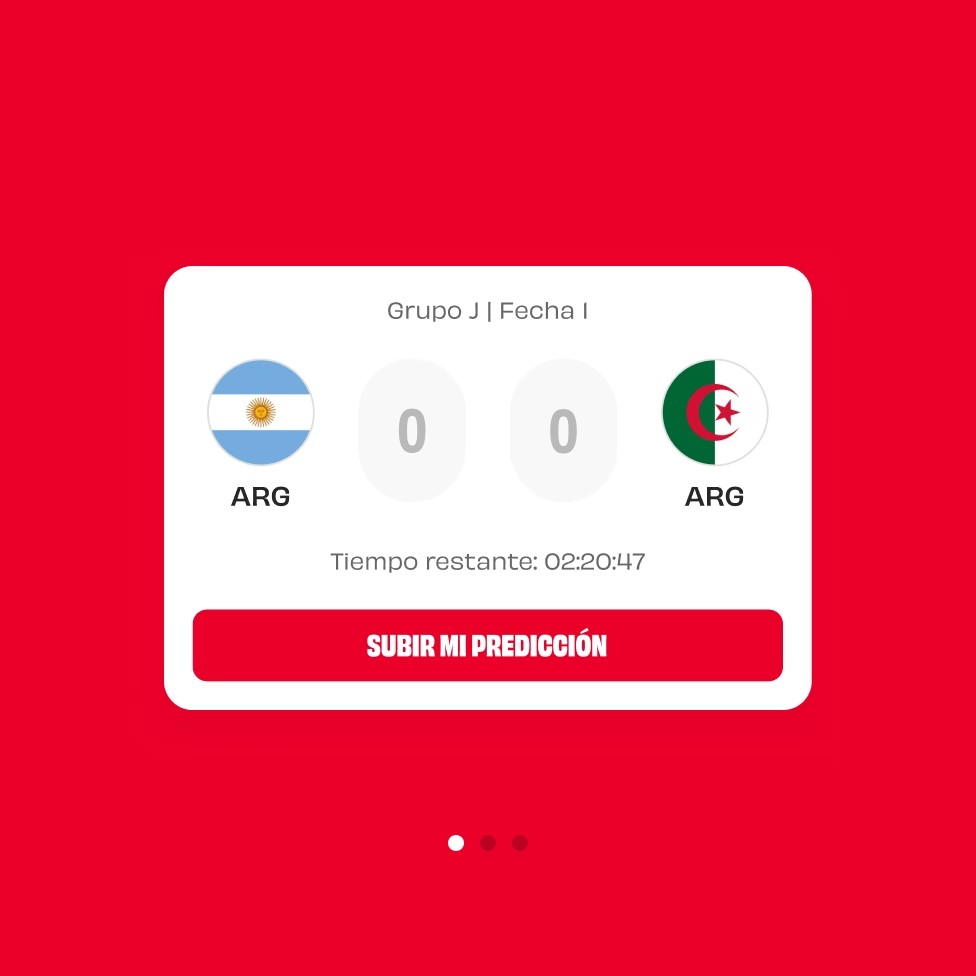
And this is where timing came in.
The World Cup is one of those moments when culture does the heavy lifting. People are already tuned into a shared energy, word of mouth becomes the most powerful form of advertising, and the real challenge is knowing how to become part of the conversation.
The World Cup was already happening. The key question was how to turn that energy into something that could live inside the app, rather than disappear behind a banner.
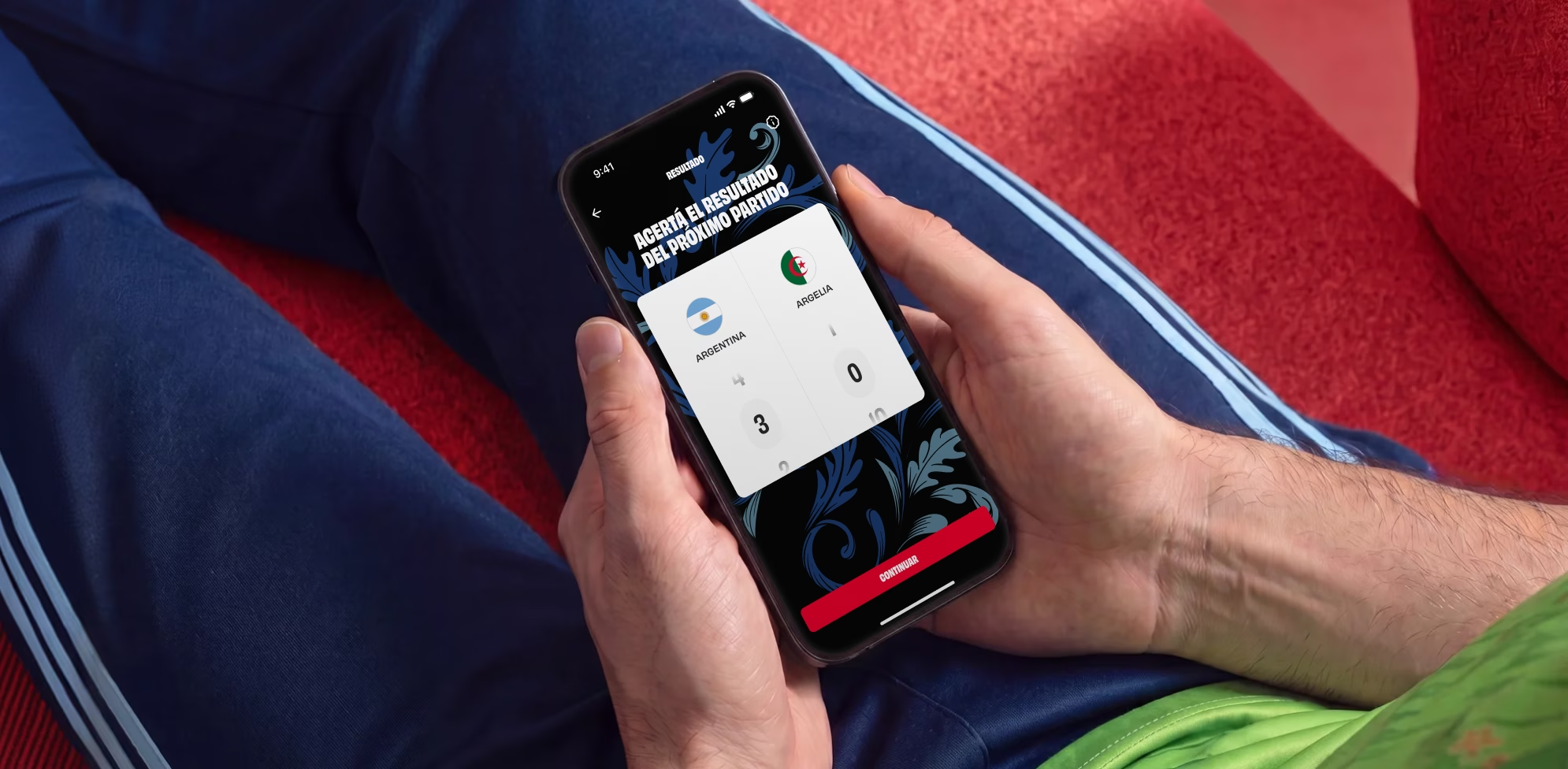
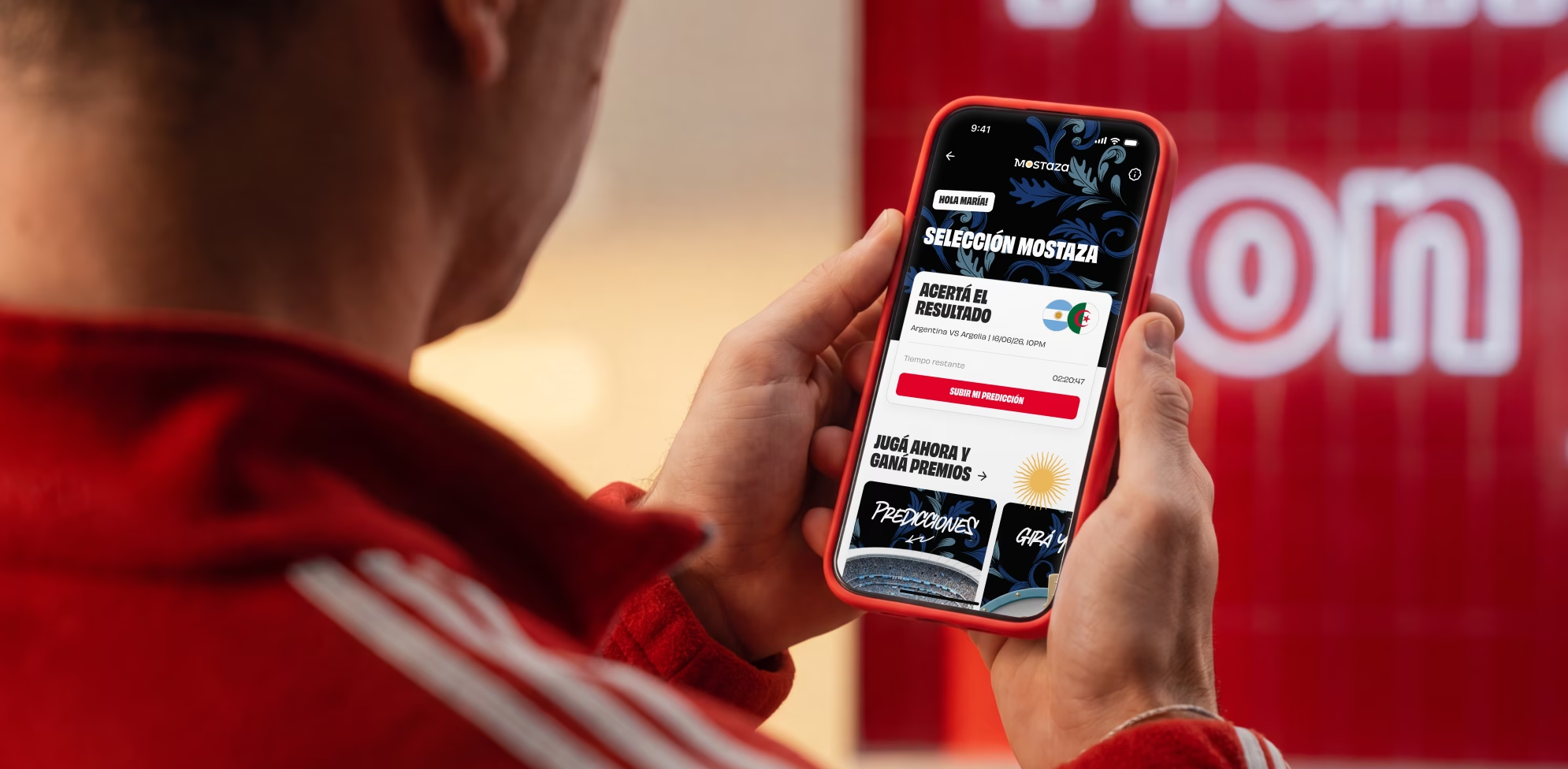
That’s why Paisanos proposed building a World Cup entertainment hub within the Mostaza app: a place that would give users different reasons to come back at different moments, before a match, on days without football, or while placing an order.
Over eight weeks, with creativity as the main driving force, we built a real gaming ecosystem around what fans want to do in the moments between matches.Today, it is available to all Mostaza app users across Argentina, Uruguay, and Paraguay.
Go to case details to know more
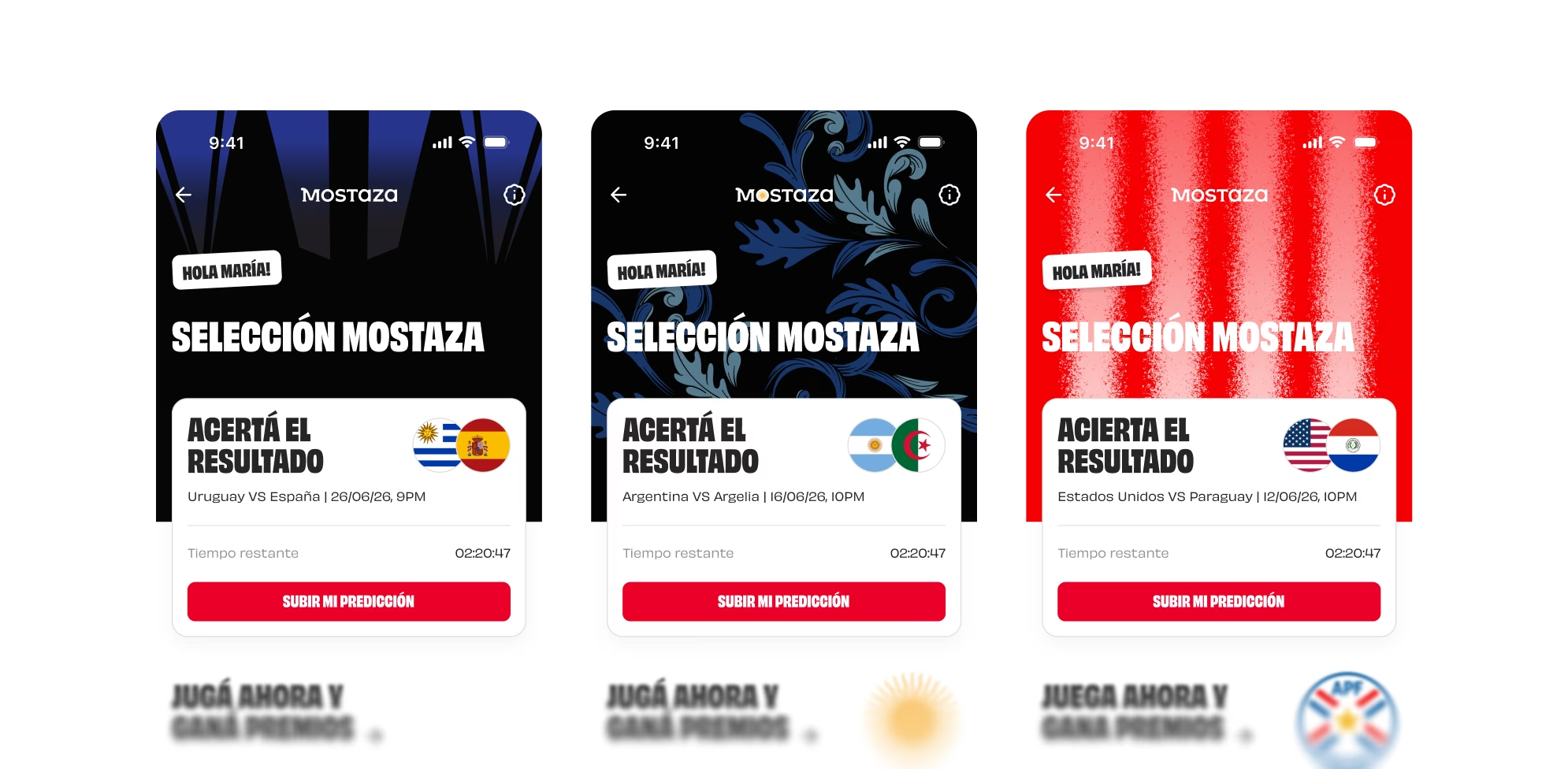
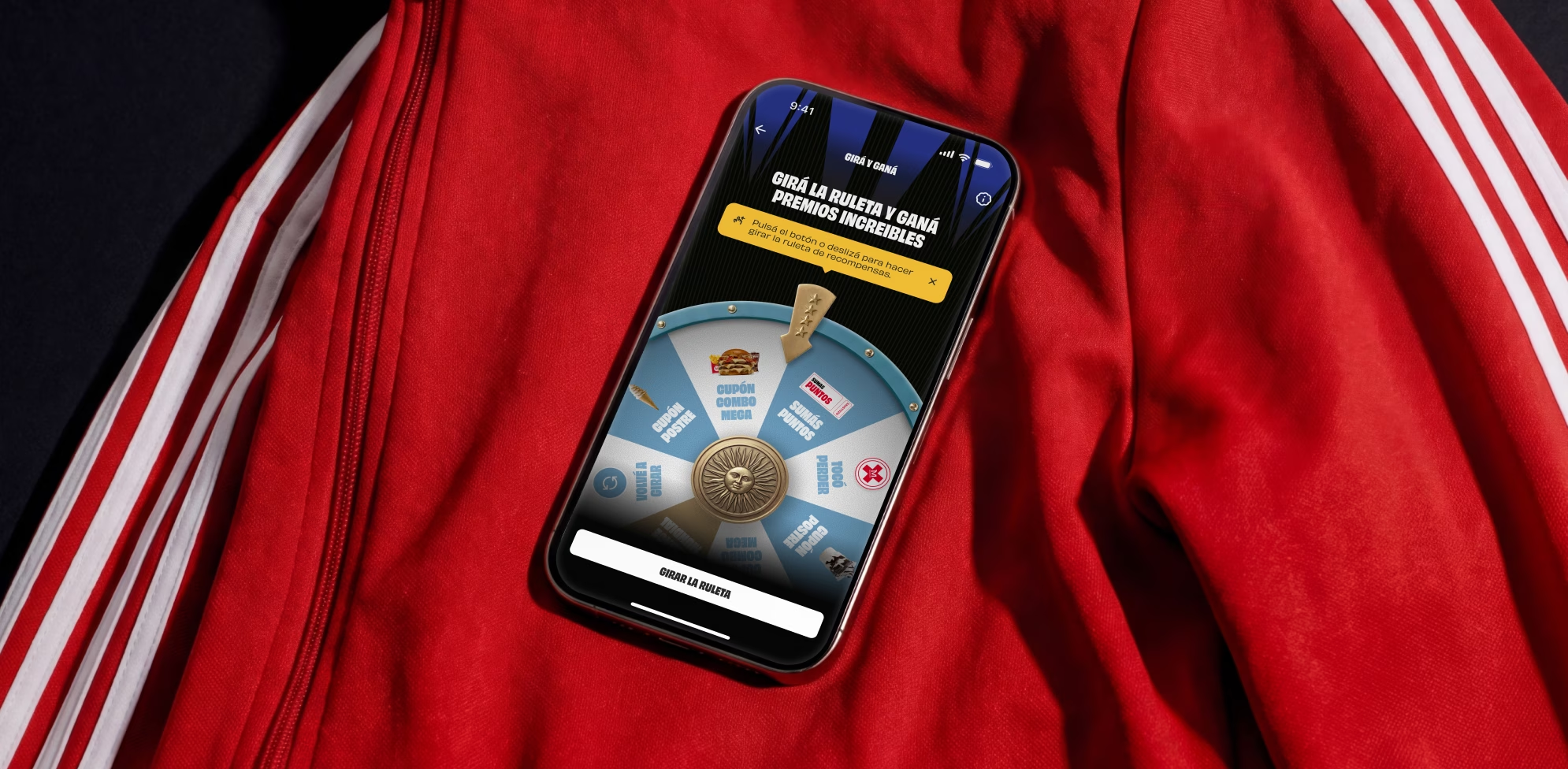
Three dynamics. One purpose.
The hub brings together different experiences within a connected system, where each one reinforces the others. Every game engages users in a different way:
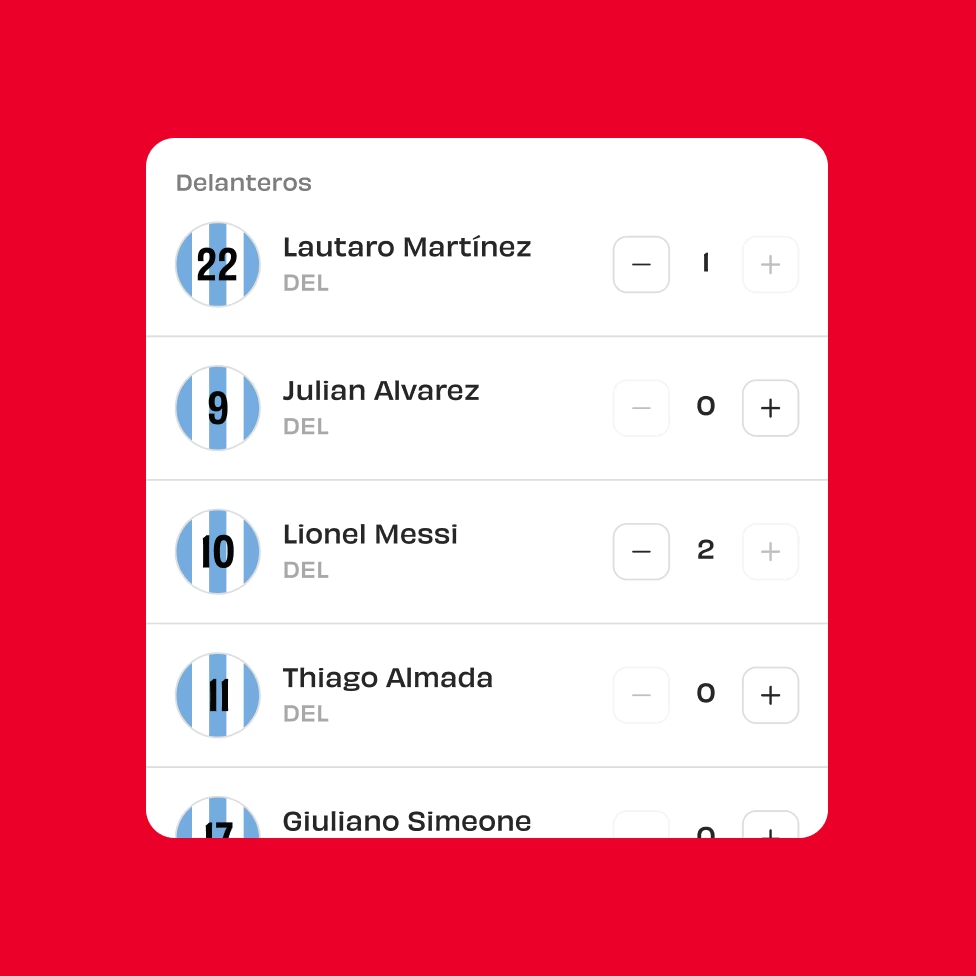
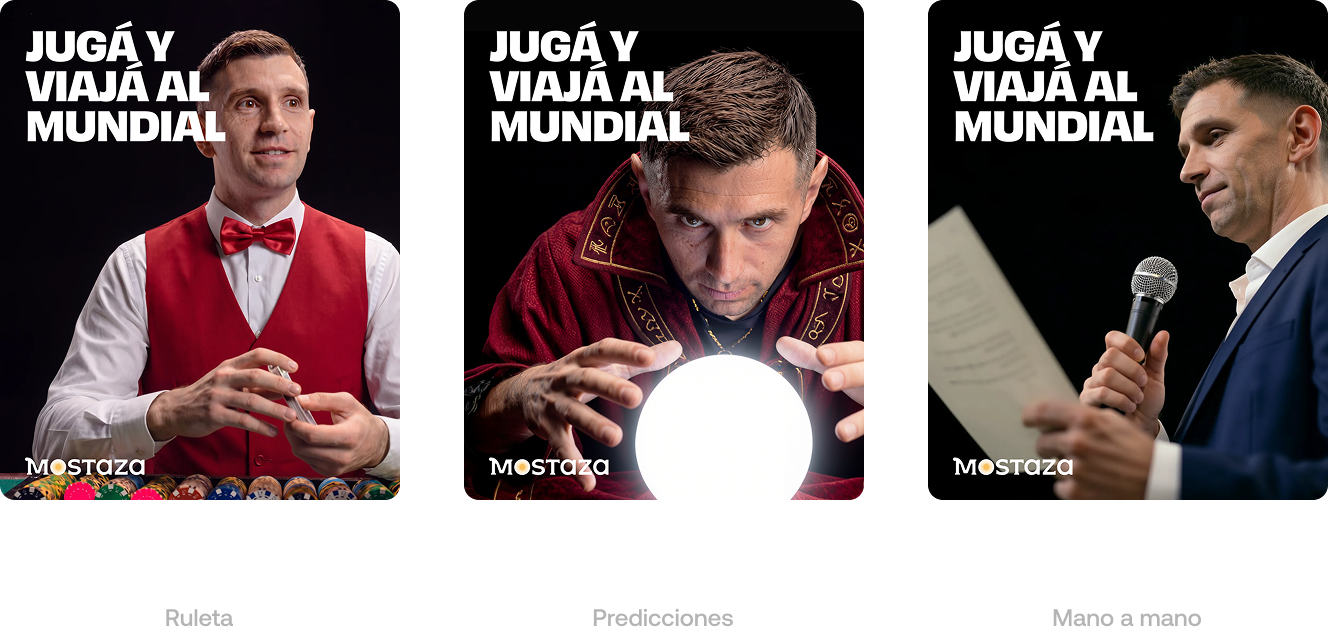
The wheel taps into the desire for one more reward. Predictions are a World Cup classic. And the head-to-head with Dibu is a trivia challenge made for true football fans.
Each experience works on its own and as part of the whole. Together, they give fans a reason to keep coming back.
Go to case details to know more
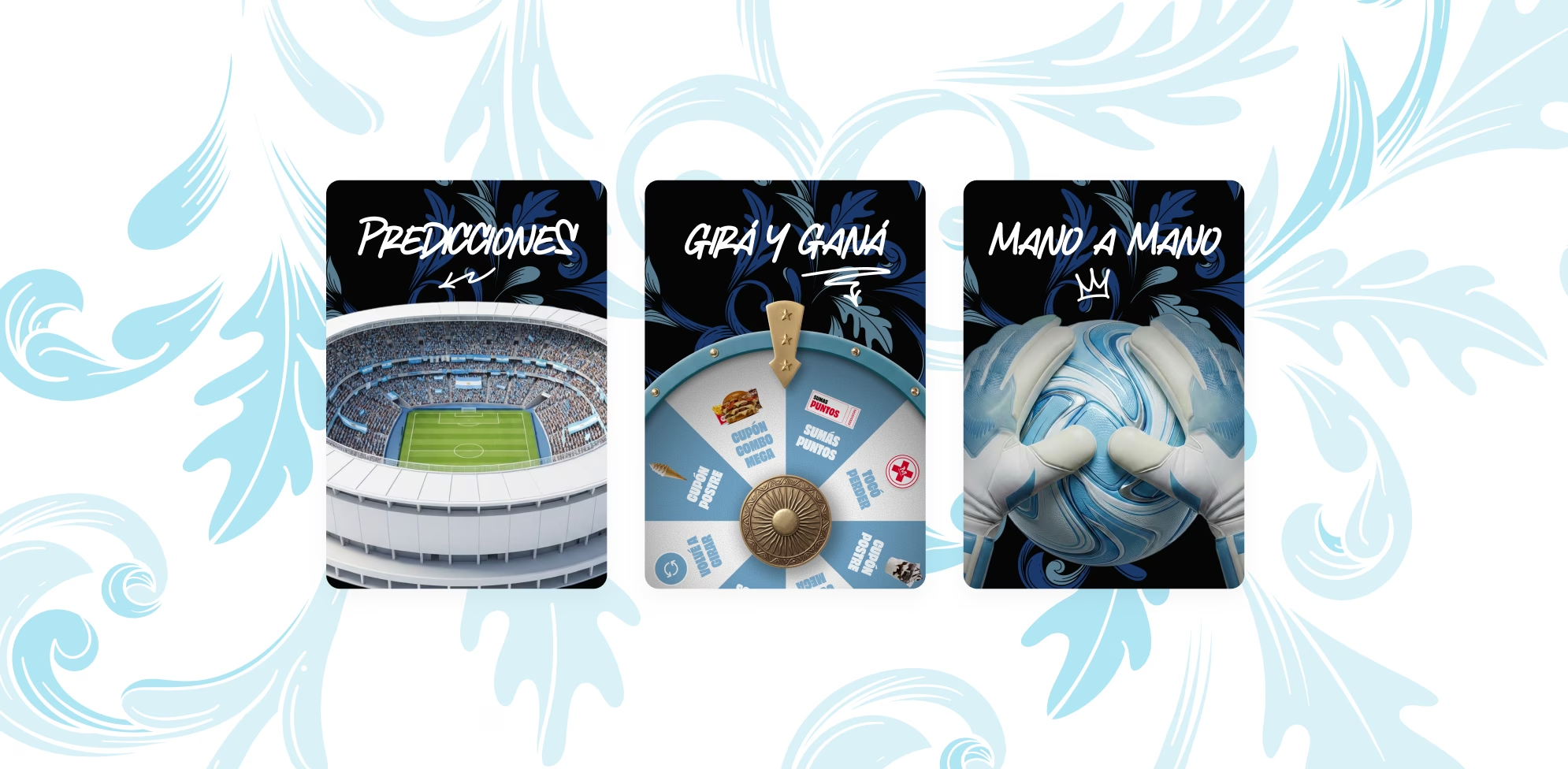
There’s more than UX behind each of these experiences.
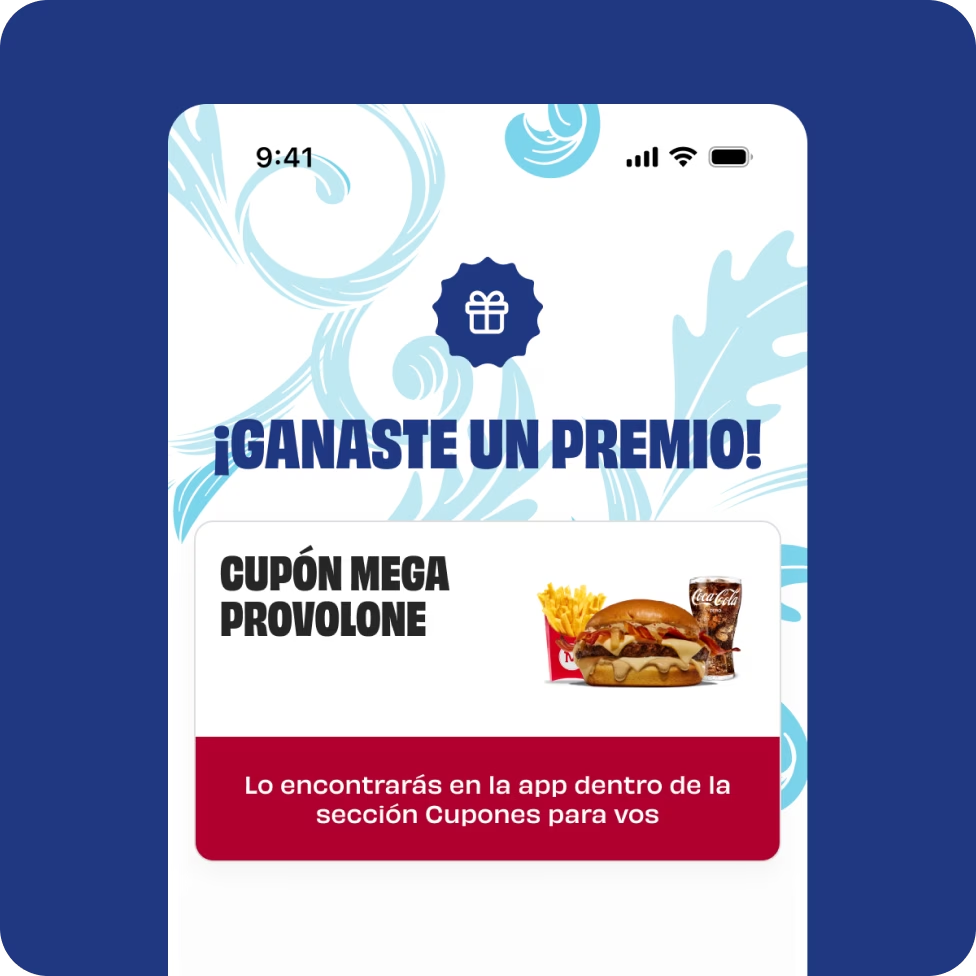
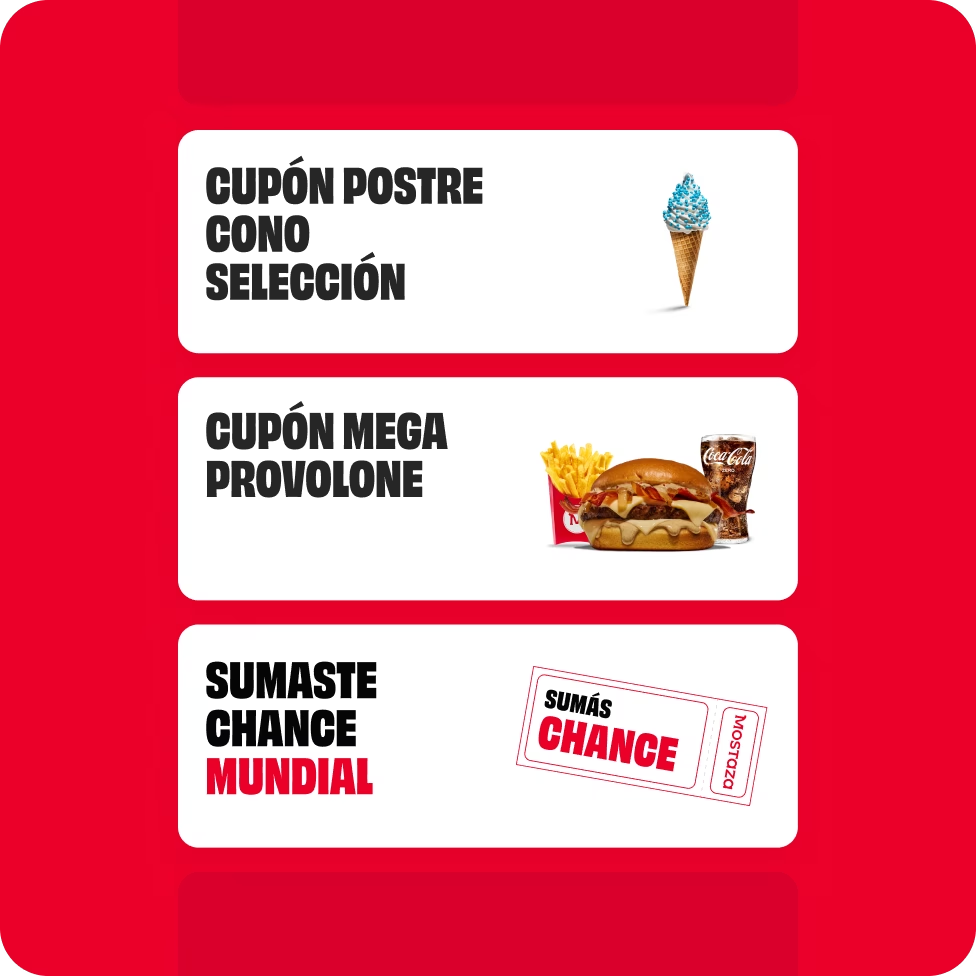
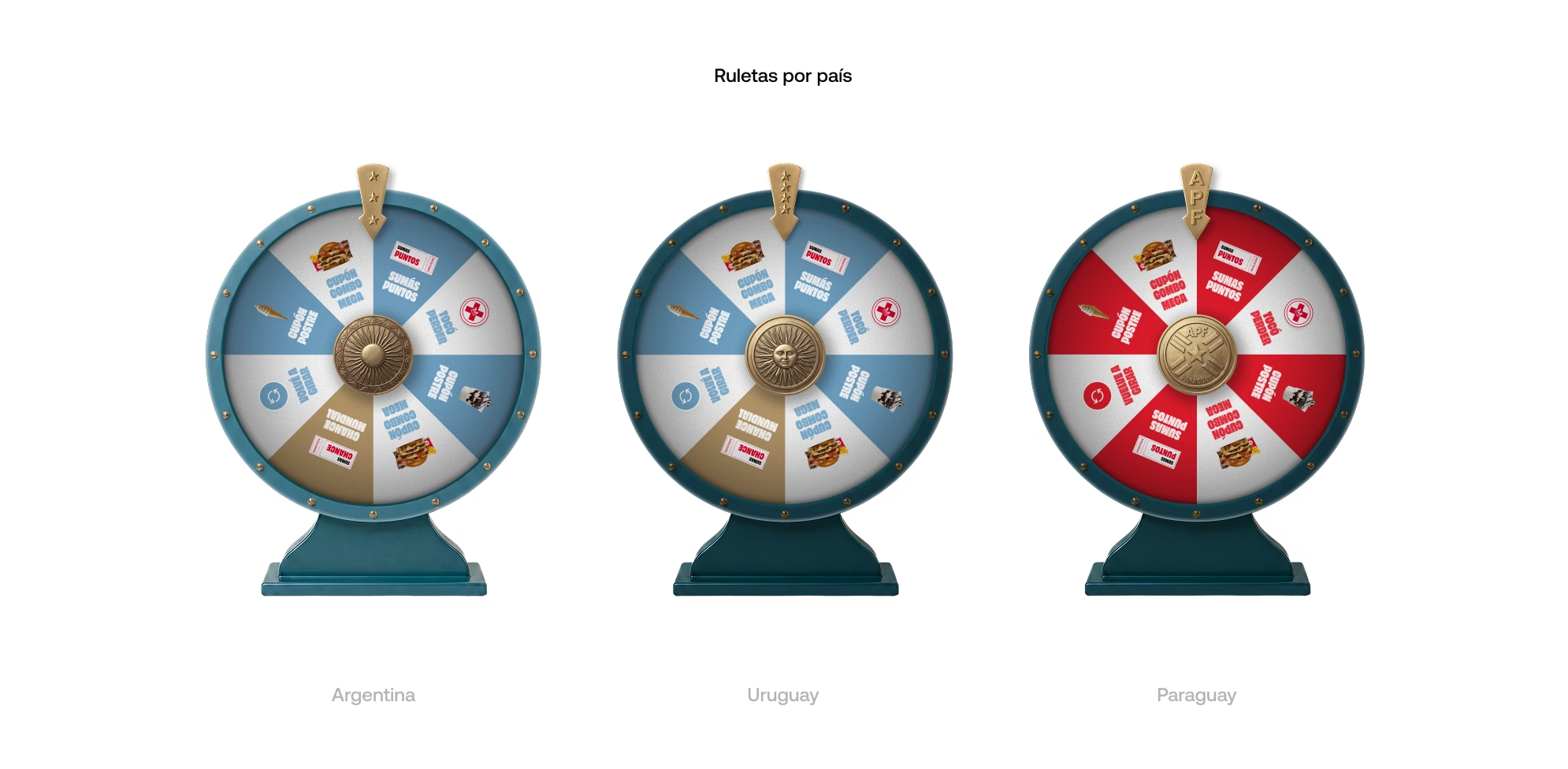
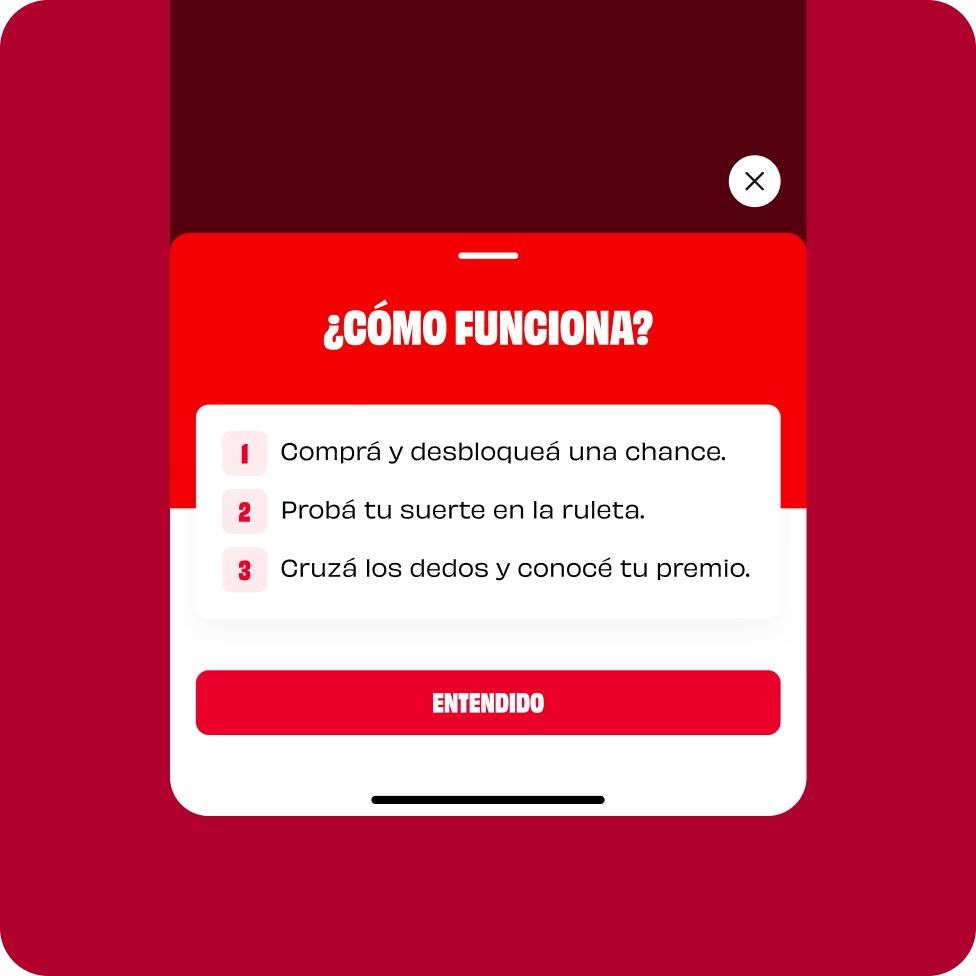
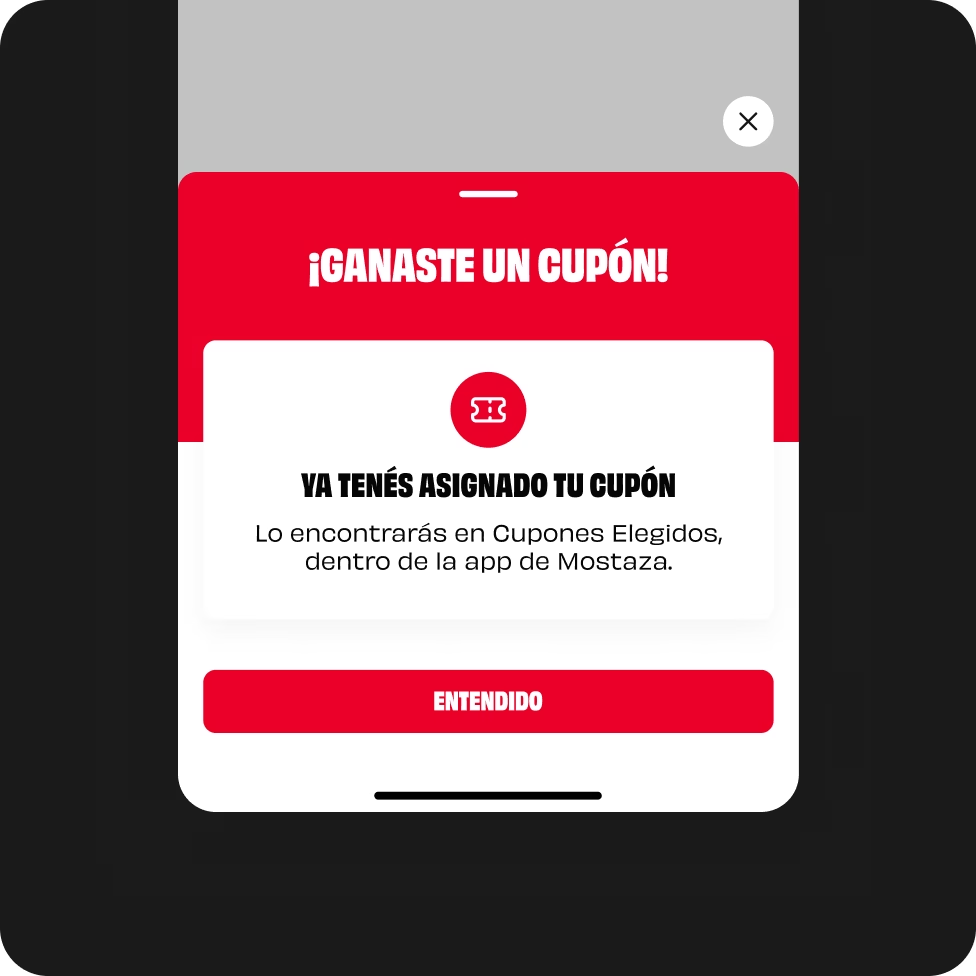
Every spin of the wheel is backed by eight different outcomes, each with carefully calibrated probabilities designed to move a specific business metric. This wasn’t simply a matter of adding eight discounts for the sake of it. We started with the metrics the client needed to improve and built the rewards around them.
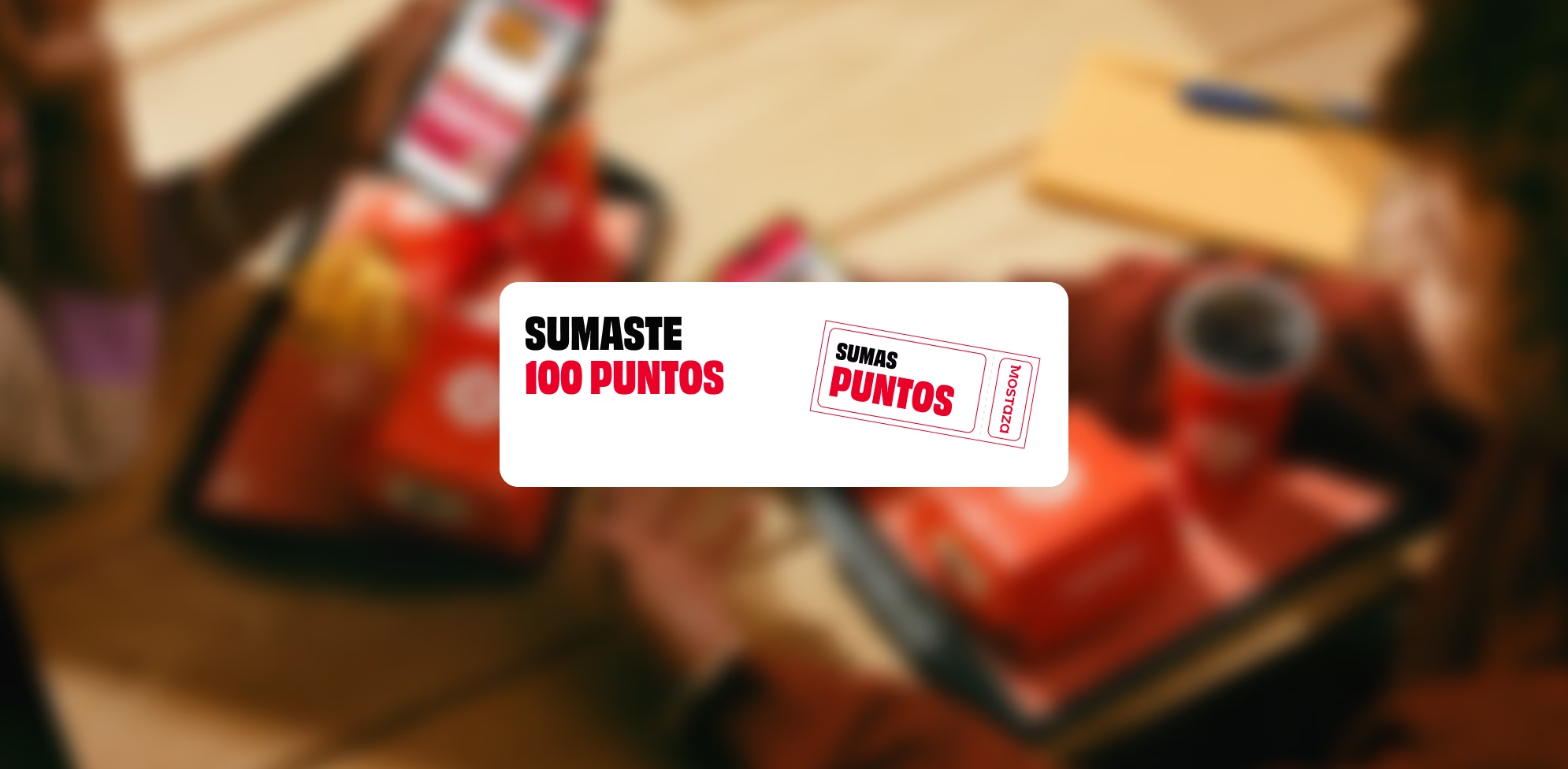
Users earn spins mainly by purchasing through Mostaza, but also by answering trivia questions correctly or making accurate predictions. The result is an architecture that turns the game into a loop: users who play have more reasons to buy, and users who buy have more reasons to come back and play again.
Go to case details to know more
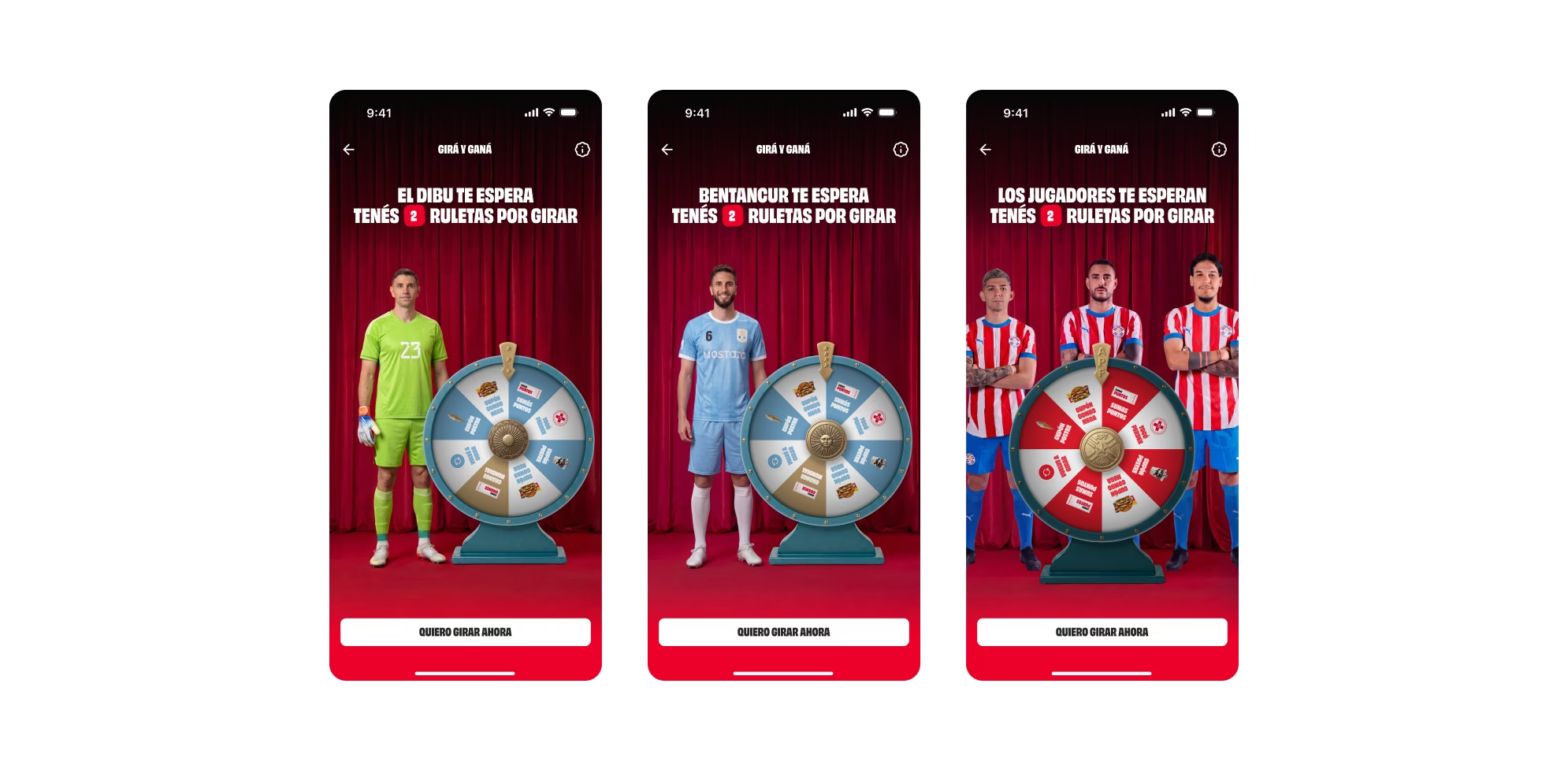
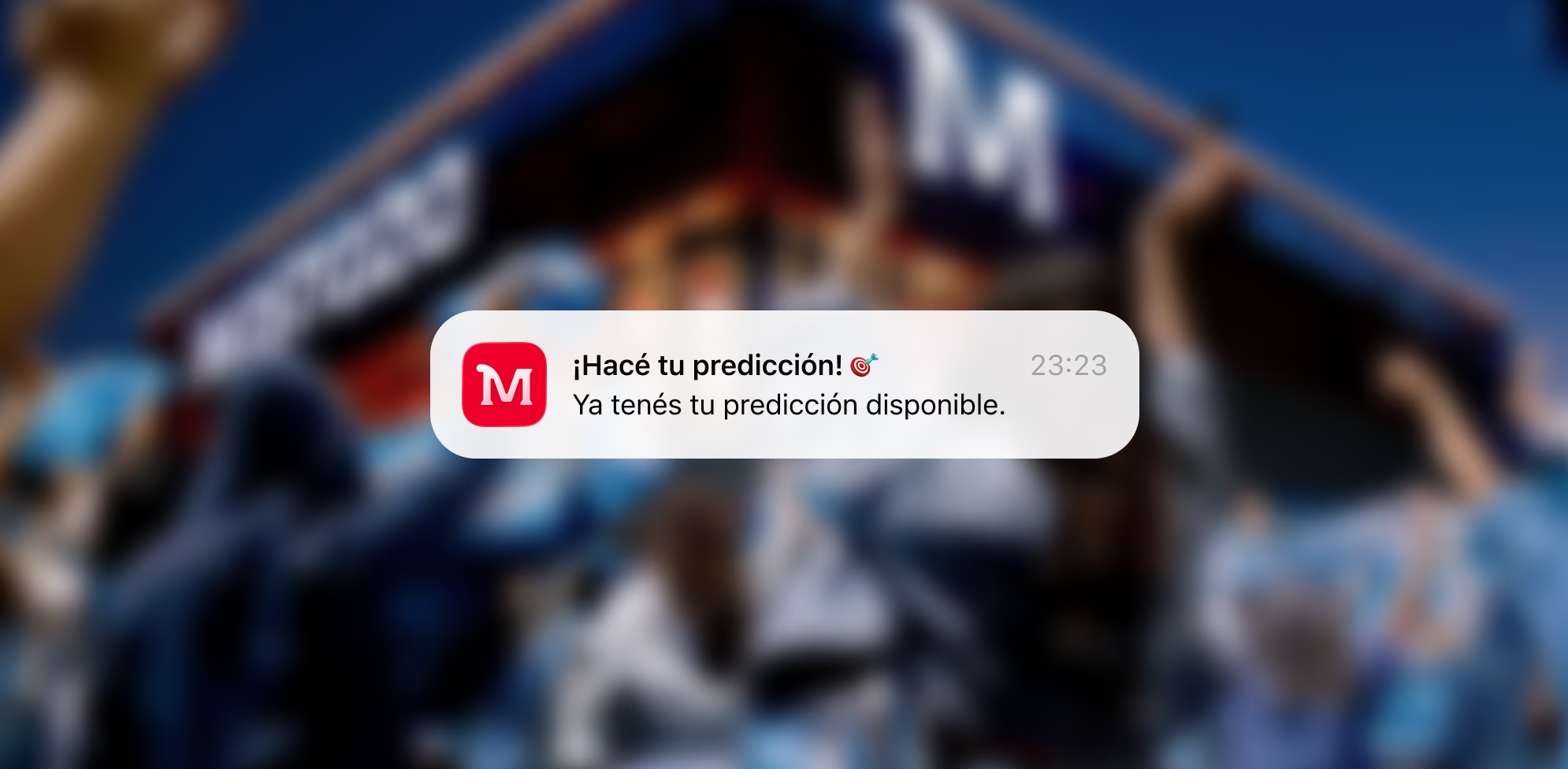
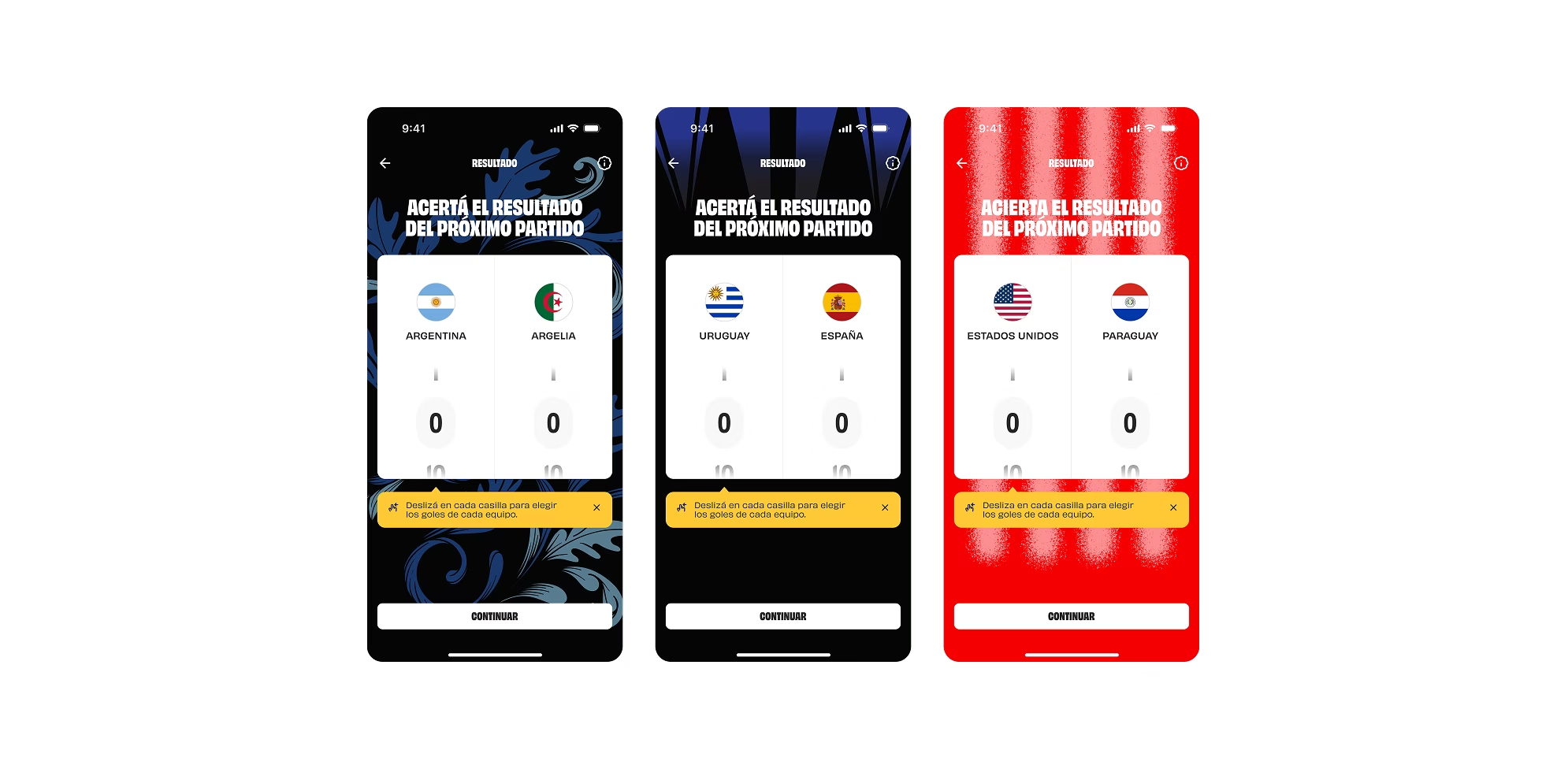
Predictions, meanwhile, create a reason to come back before users even think of opening the app. As a match approaches, the hub sends a push notification letting them know it’s time to make their pick. Suddenly, they have a reason to return, maybe three days before they even think about ordering a burger.
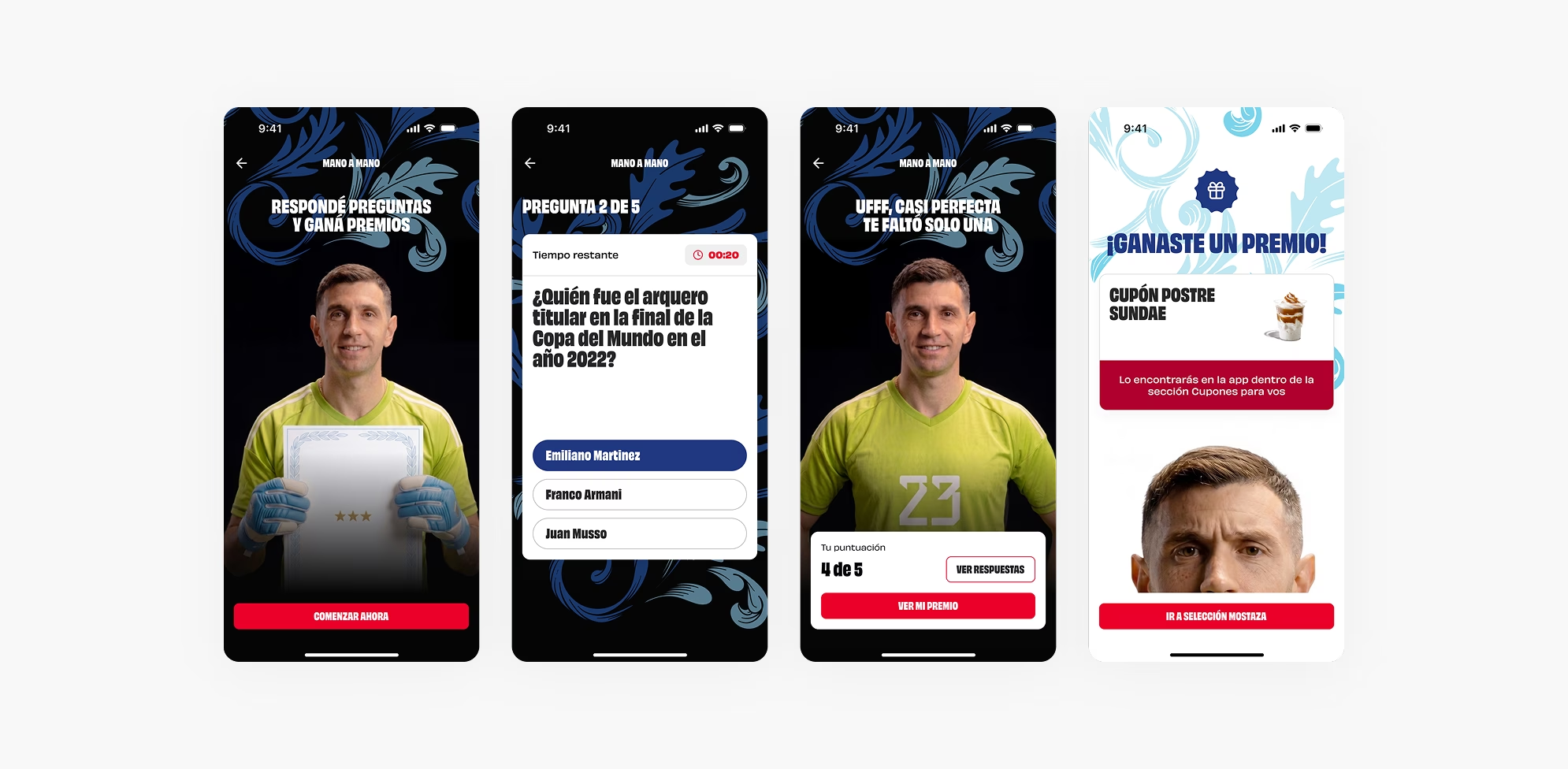
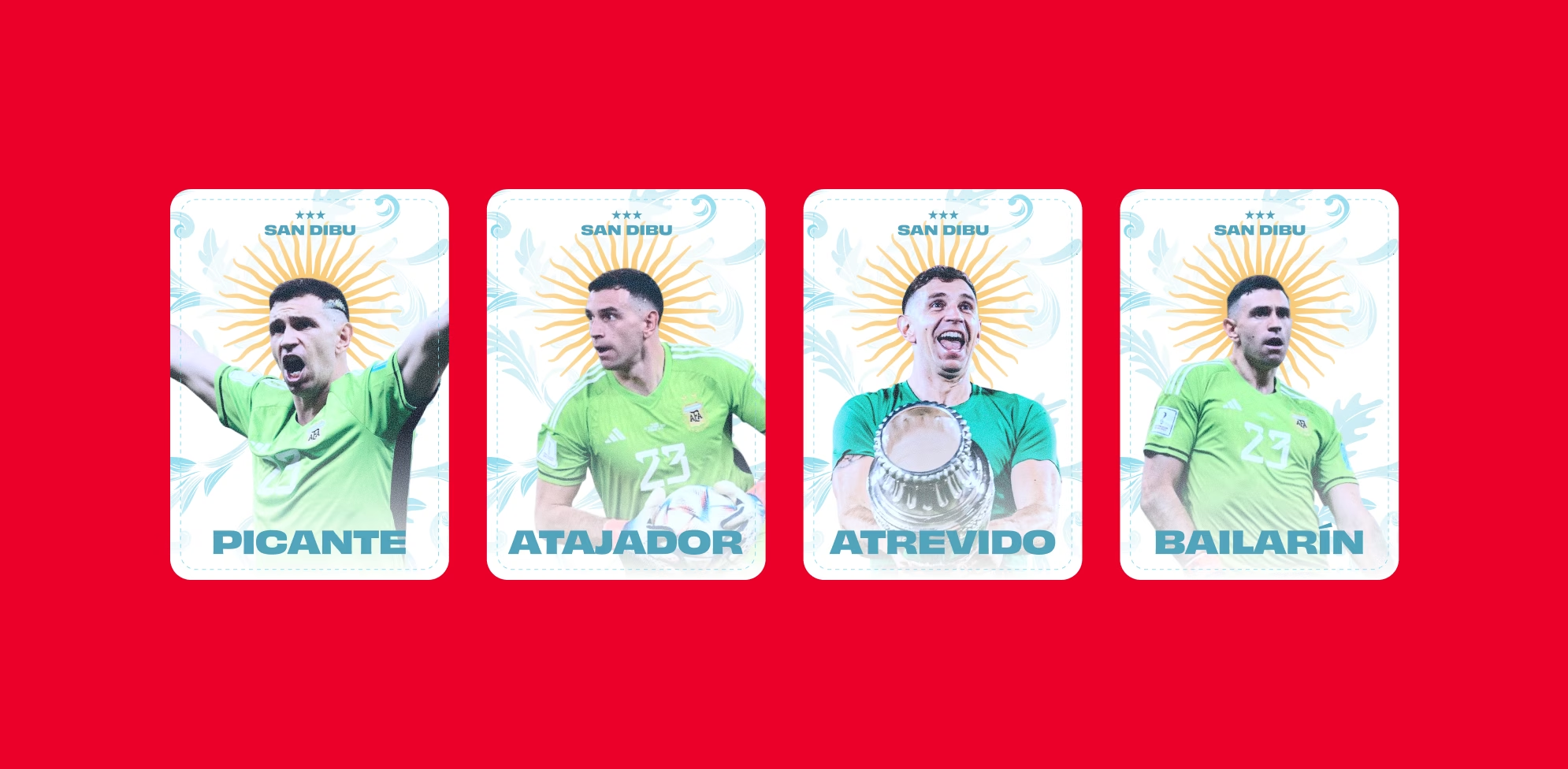
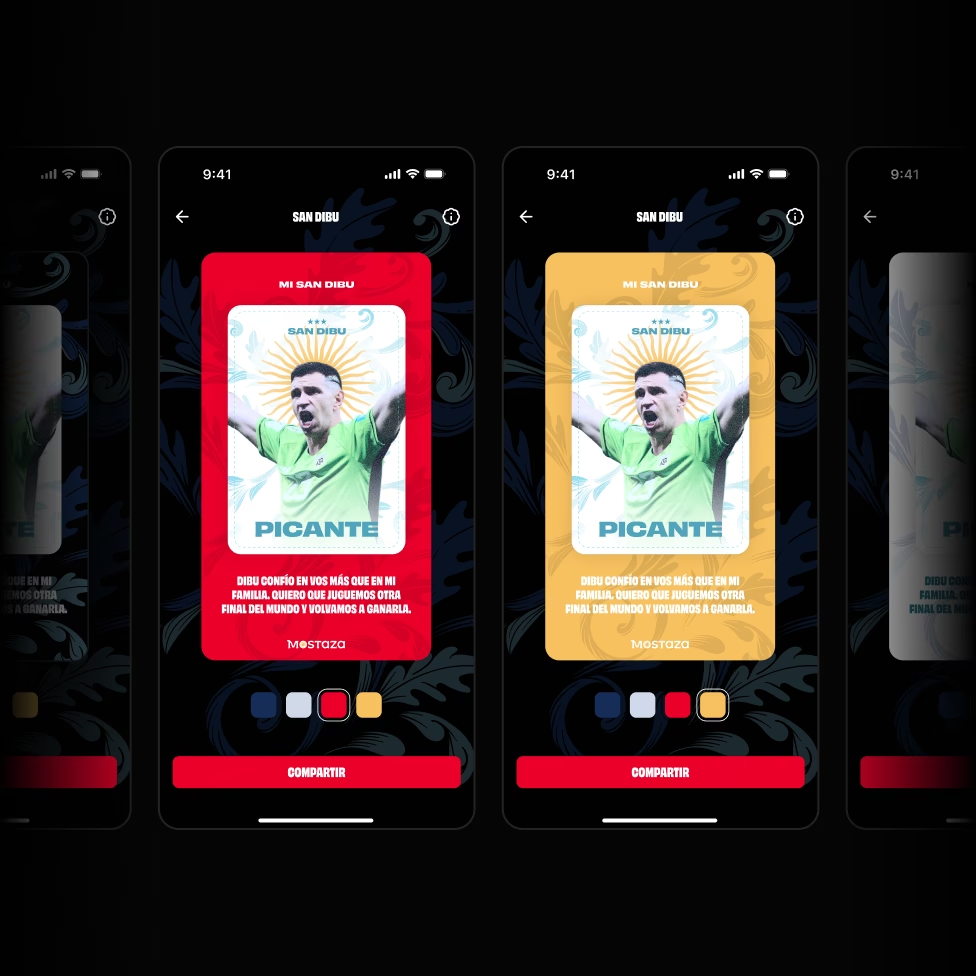
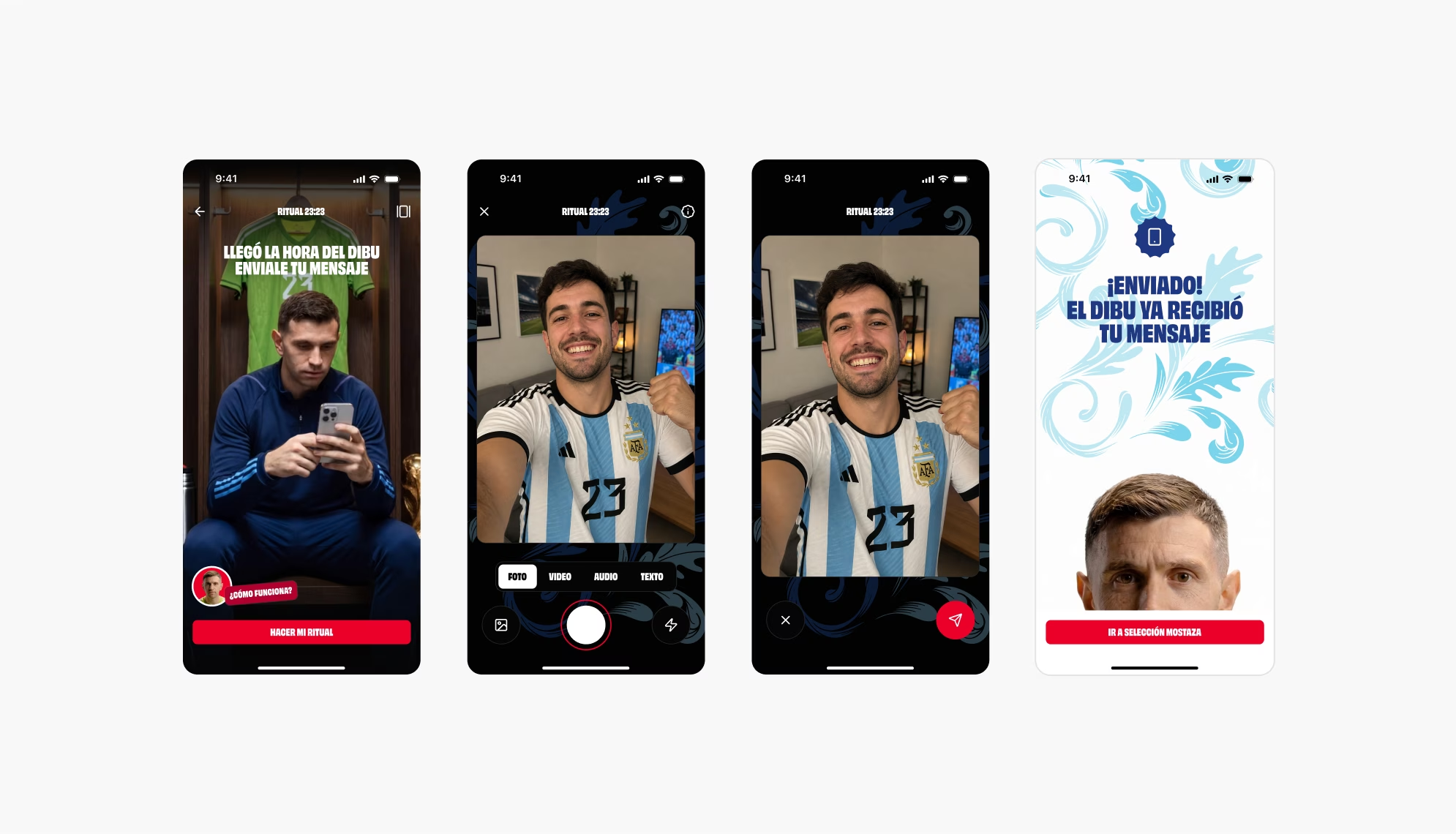
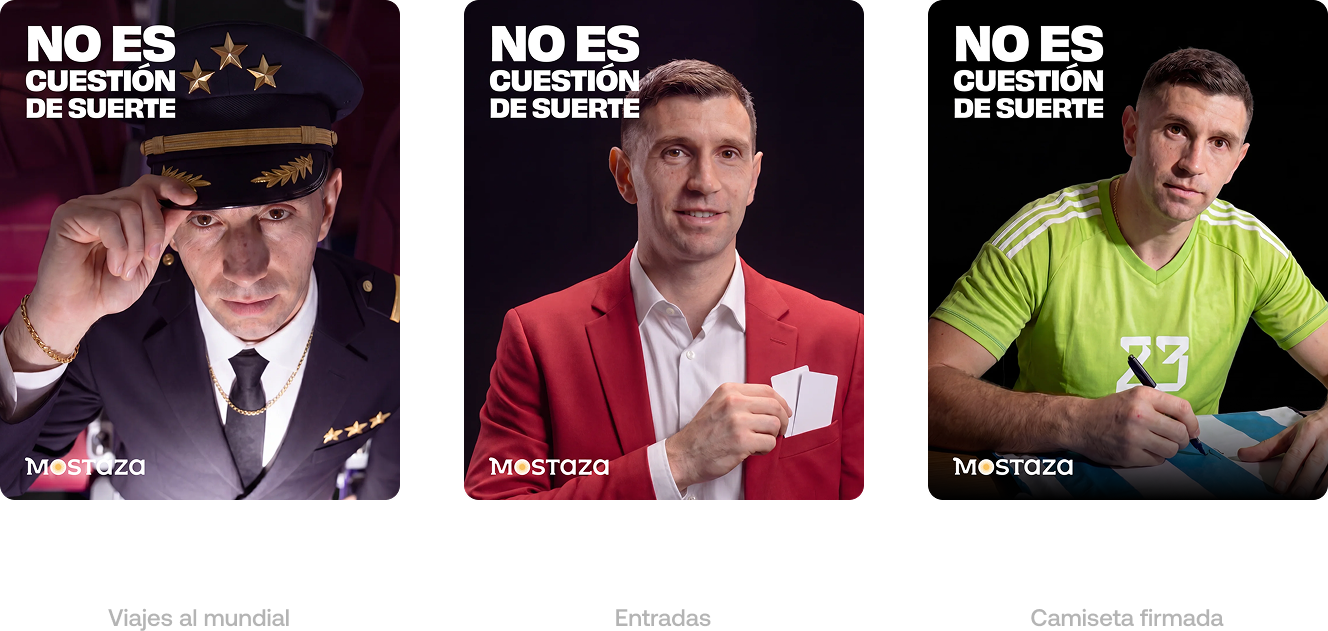
Finally, the head-to-head with Dibu was the most playful experience. He’s hard to beat, and his reactions change depending on your score. Out of 45,000 people who played, only 9,000 managed to win.
That wasn’t a bug. It was part of the design.
For a challenge to feel rewarding, it has to feel real, like the last-minute save that can win you the World Cup.
Go to case details to know more
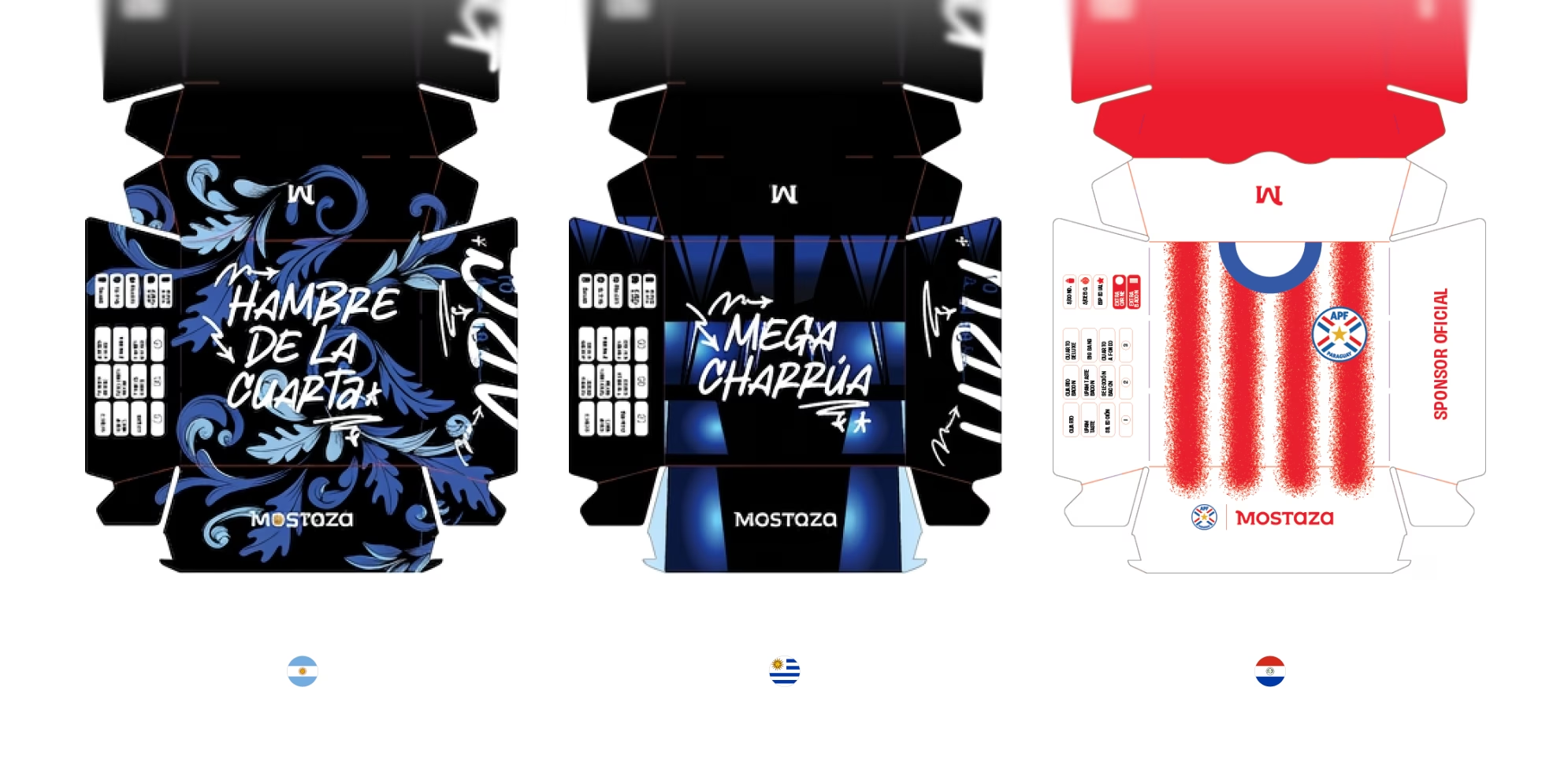
Behind the entire gamified experience, we left a subtle nod to the brand’s history.
The visual assets were inspired by Mostaza’s burger boxes. We brought the packaging into Adobe Illustrator and extracted the texture that now lives across the banners and throughout the hub. We understood that the brand’s identity also needed to be present in the fan’s most passionate moments, and that our job was to activate it, not replace it.
By incorporating each national team’s colors and creating a distinctive design for every market, we also made the experience feel locally relevant. Argentina and Uruguay are represented in blue, while Paraguay keeps Mostaza’s signature red.
Go to case details to know more
Eight weeks of work later, the numbers began to tell a story of their own.
Since launch, more than 50% of users who entered the hub have completed at least one experience from start to finish. To put that into perspective, most digital experiences of this kind celebrate conversion rates between 20% and 30%.
The momentum was clear from the start: active users grew by 184% from the first week to the second, laying the foundation for everything that followed.
Go to case details to know more
.avif)
Week after week, the system proved to be well calibrated, while users gradually learned how the loop worked. The wheel maintained a conversion rate above 80% among users with an available spin. It also attracted a significant number of visits from users who had no spins left, meaning they came back even after completing their previous turn. Meanwhile, the quiz maintained a completion rate above 80%.
Users were not only learning how to engage with the system. They were adopting the exact behavior it had been designed to create: returning to the app without an immediate transaction in mind.
Go to case details to know more
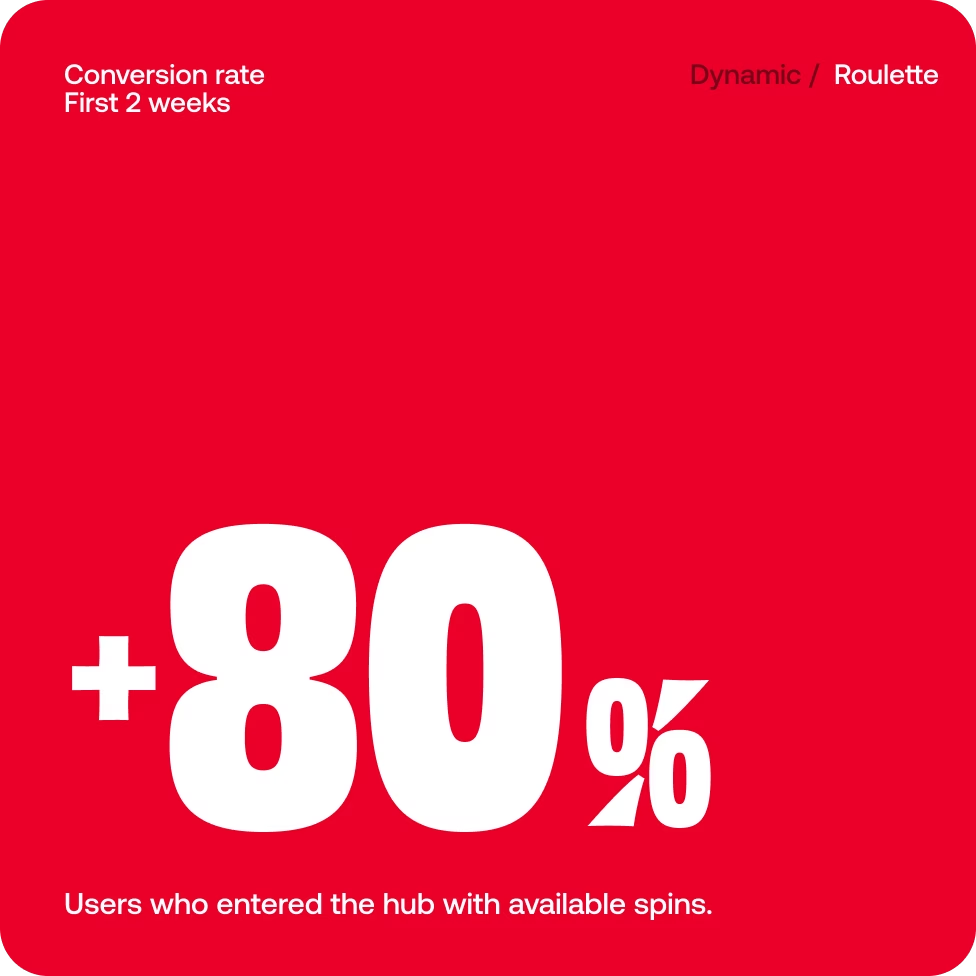
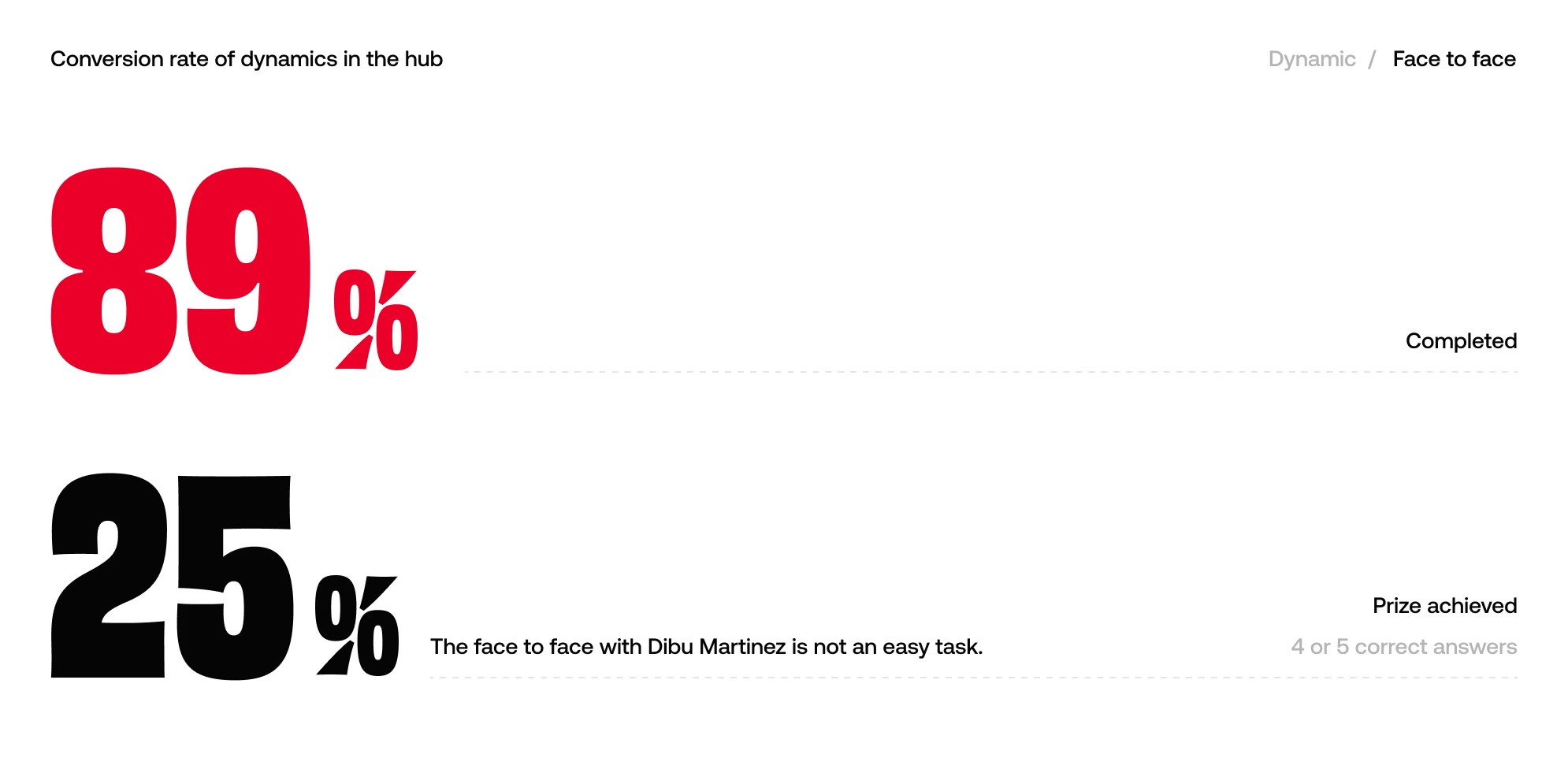
Week after week, the system proved to be well calibrated, while users gradually learned how the loop worked. The wheel maintained a conversion rate above 80% among users with an available spin. It also attracted a significant number of visits from users who had no spins left, meaning they came back even after completing their previous turn. Meanwhile, the quiz maintained a completion rate above 80%.
Users were not only learning how to engage with the system. They were adopting the exact behavior it had been designed to create: returning to the app without an immediate transaction in mind.
Go to case details to know more