

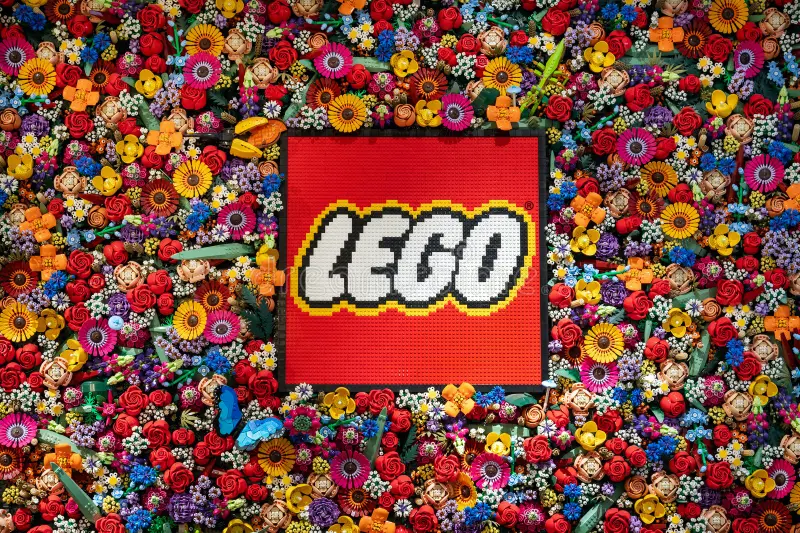
Official LEGO page on the company’s history, from its founding in 1932 to the creation of the iconic brick system and its global growth.
Read postLEGO: How to Turn a Product into Your Brand’s Primary Asset
Let’s pause for a second and get theoretical.
Today, brands aren’t just competing to steal a second of your attention; the real battle is to avoid disappearing altogether. We’re speaking to a generation that lives at high speed, culturally fragmented, and fully accustomed to planned obsolescence: what’s new today is already irrelevant tomorrow.
The truth is, building symbolic value today feels like walking a tightrope. Promises are everywhere and narratives are constantly refreshed, but where does trust live? It’s fragile. When you don’t have a system to support it, it slips through your fingers.
LEGO has always been a case study we’re drawn to. A company that managed to articulate growth, cultural legitimacy, and intergenerational continuity without relying on hysterical cycles of reinvention.
So what’s the point of all this prelude?
LEGO’s value doesn’t lie only in its communication. It lies in having strategically designed its product to function as the brand’s primary asset. It’s not the packaging. It’s the content.
Rather than analyzing LEGO as a “toy,” this article proposes thinking about it as a system where product and branding converge. It’s a key lesson for those of us leading in this industry who want to build brands that last, especially in digital environments where love for a brand isn’t declared, it’s experienced firsthand.
Brands that leave no trace
In the digital era, there’s something that gives me vertigo: products iterate at extreme speed, brands are constantly redesigned, and users live in a perpetual churn cycle. They learn, get bored, leave, or forget what felt indispensable yesterday. Being disposable is no longer the exception; it’s the industry standard.
From a business perspective, the cost is enormous. When nothing endures, nothing accumulates meaning. Without accumulation, there’s no legacy. Without legacy, there’s no tradition. And without tradition, brands are reduced to short-term hacks designed to steal a click, only to be replaced by the next viral post.
LEGO operates on a different operating system. Instead of accelerating change, they domesticated it. They don’t eliminate novelty, but they integrate it into a system that remains stable (and compatible) over time. While most brands chase the next thing, LEGO focuses on something much harder: making time work in their favor.
The cultural decision
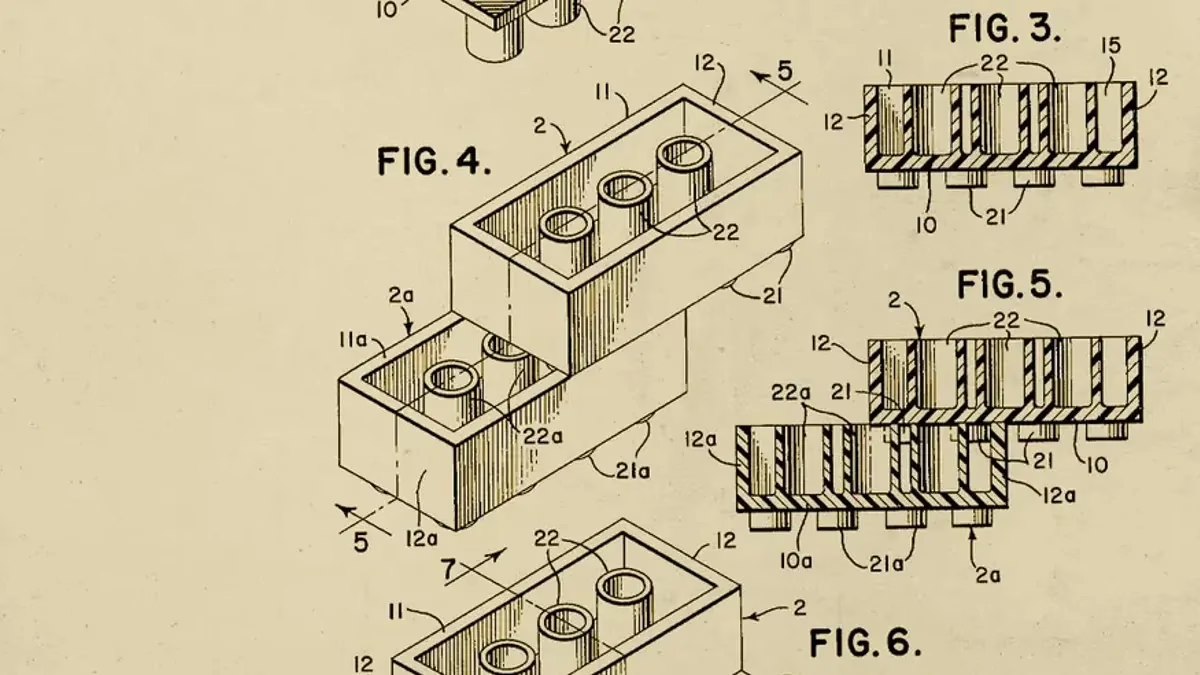
LEGO bricks were patented in 1958. Since then, they’ve been used in design schools as a classic example of industrial design, but their real impact is strategic. By ensuring that a piece made 60 years ago fits perfectly with one purchased today, LEGO introduced into the physical world a concept we love in software: compatibility.
That decision transformed a toy into a standard. And a standard is, essentially, a promise that doesn’t break.
Each new box doesn’t replace the old one; it expands the system. Nothing becomes obsolete. Everything can be refactored and reused. The product stops being an object forgotten at the bottom of a drawer and becomes part of an infinite set of building possibilities.
For anyone working in strategy, the insight is powerful: durability lowers perceived risk and builds trust without the need for overperformative marketing. Value accumulates. Users don’t feel like they’re spending money on disposable plastic; they feel like they’re investing in a long-term project that someone else may one day inherit.
In digital products, the same principle applies. When you guarantee continuity, you stop explaining and start demonstrating. Trust stops being a message and becomes user experience.
Time, Accumulation, and Legacy
Unlike most mass-market brands, LEGO doesn’t depend on its next advertising campaign. Its retention strategy rests on two pillars, executed with discipline:
- Material: indestructible hardware that passes from generation to generation.
- Symbolic: emotional software made of shared memories and creativity.
This places LEGO in a unique category: it’s a family memory.
Each purchase isn’t an isolated transaction. It’s a new chapter in a story that has been unfolding for generations. The product doesn’t become boring because it’s always ready to be dismantled and rebuilt into something new.
For a marketing director, this is gold. The more history the product accumulates, the higher the brand’s ROI. Activations stop being random shots in the dark and become episodes in an ongoing season. The product ceases to be simply “what you sold” and becomes the primary channel where the brand lives.
It’s compound interest applied to branding.
Scaling without breaking
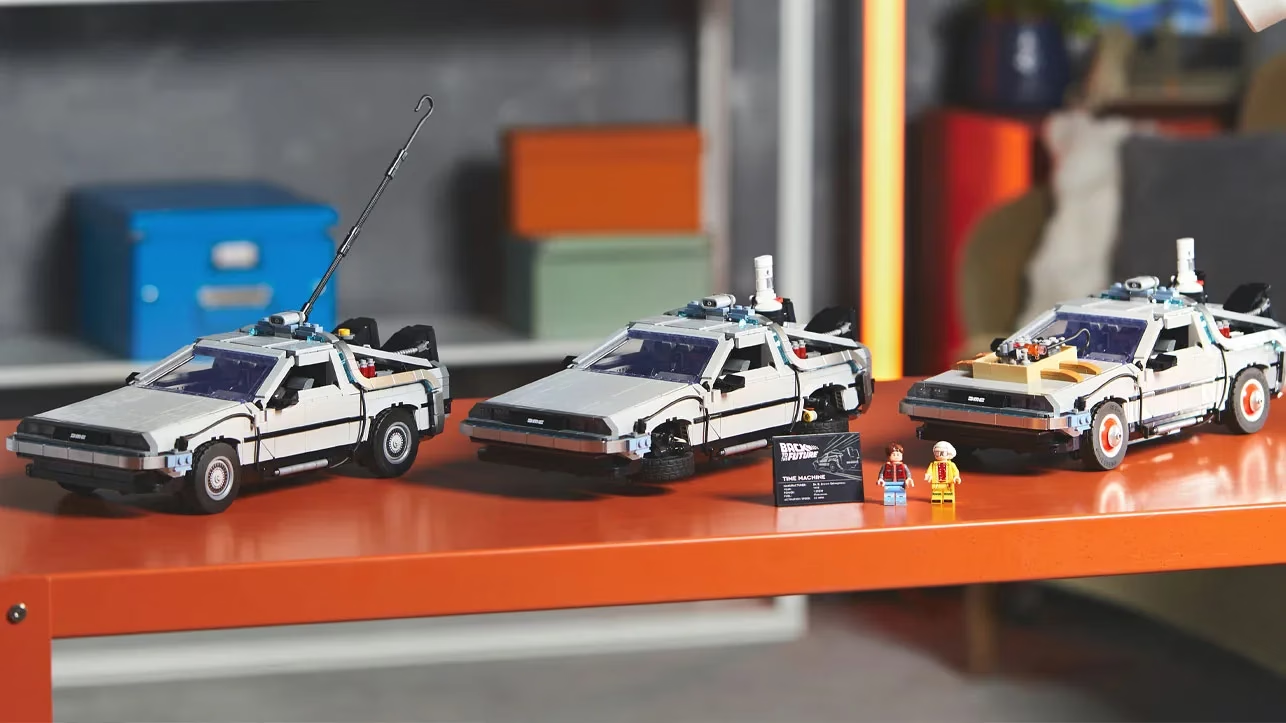
LEGO’s franchise drops (Star Wars, Harry Potter, Back to the Future) often look like simple sales tactics to capture massive audiences. But look closer and there’s something more interesting happening.
LEGO doesn’t copy-paste these brands. It forces them to translate into LEGO’s language.
External narratives aren’t incorporated literally; they’re submitted to the modular system, broken down and rebuilt according to LEGO’s own rules (the “System of Play”). This mitigates the biggest risk of co-branding: that the license overshadows your brand.
Dr. Emmett Brown has to adapt to becoming a minifigure. The focus isn’t a borrowed story; it’s LEGO’s system’s ability to process that story without crashing.
From a branding perspective, the product acts as a strategic bumper. Not every story works. Only those that withstand “pixelation” into the brick world are welcome. The design system isn’t negotiated; it adapts.
Licenses stop being shortcuts for reach and become skins or extensions that preserve the base platform, without turning the brand into a Frankenstein.
LEGO is Open Source
Another brilliant move is how LEGO formalized user participation.
Platforms like LEGO Ideas (where the community proposes new sets that can become real products if they gather enough support) and the acquisition of BrickLink (a marketplace where collectors, designers, and fans can source exactly the pieces they need) aren’t CSR gestures or community “nice-to-haves.” They’re strategic business decisions to expand the pie.
This shows real maturity. The brand doesn’t protect itself by closing off; it establishes clear participation protocols (almost like a GitHub repository). The community isn’t decorative. It’s part of R&D.
Participation isn’t shouting from the sidelines. It’s building within a defined framework.
Strategically, this changes everything. The brand stops being a monologue and becomes a conversation (build in public). Value feeds back from the community. Activations aren’t just about broadcasting; they’re about triggering interaction, testing ideas, and turning the product into a shared stage where the brand is built in real time.
A game for Grown-Ups
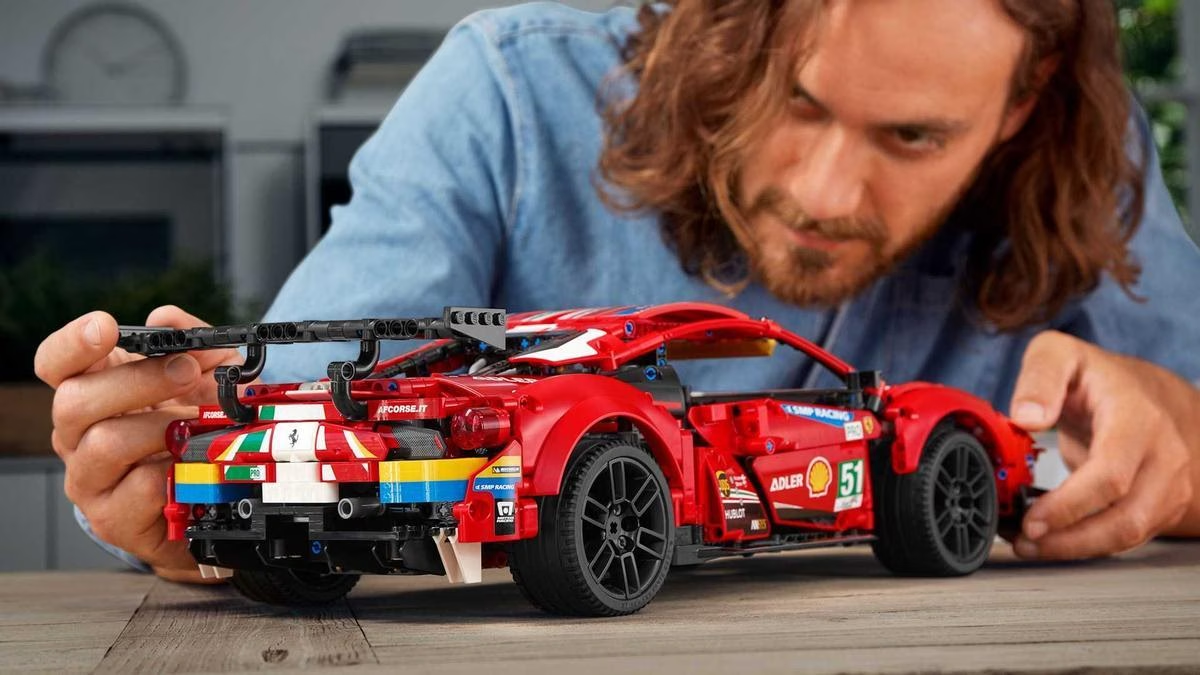
One of LEGO’s smartest recent moves was inviting adults to play.
And importantly, they didn’t change the product or force a redesign. They reframed the context.
The brick shifted from “toy” to design object, mindfulness tool for disconnecting from work stress, or collectible piece. They didn’t change the feature. They changed the use case.
They transformed the cultural frame that legitimizes a 40-year-old buying a $300 “toy.”
There’s a textbook lesson here for any founder: effective branding isn’t always about redesigning; sometimes it’s about reframing.
The best moves don’t always invent new functionalities. They uncover new jobs-to-be-done that the product was already solving but no one had noticed. If the product is solid, growth doesn’t come from disguising it, but from finding new places for it in people’s lives.
The Product as a Brand Asset
The LEGO case goes far beyond the toy industry. It’s a thesis on how to build value.
When product strategy is designed as a system (coherent, cumulative, and open), it stops being a commodity and becomes the primary asset.
Under this logic, marketing stops being the department that “tells” the product’s story. It becomes the function that activates the product as a platform: the place where desire is created.
For those of us building digital products, this is critical. Our apps and platforms aren’t just utilities; they’re spaces of meaning. They must be capable of sustaining identity and belonging beyond whether paid ads are driving traffic.
The Product is your own Media Channel
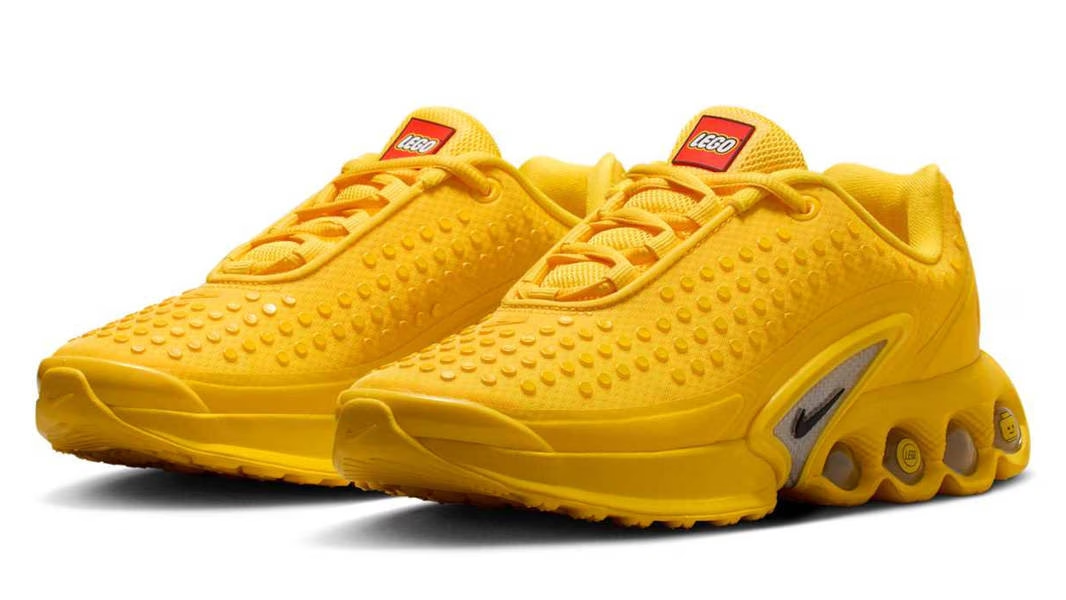
Read between the lines and LEGO is telling us something many overlook: your product is your most powerful communication channel.
Stop thinking of the product only as what you sell and start seeing it as owned media. It’s the most strategic place where the brand is consumed repeatedly and where you gather real behavioral data.
The product must function as a retention channel and as a logbook where value is refined through use. The brand stops “speaking” from the outside and starts being experienced from within: in every interaction, every UX decision, every update informed by what you learned from the previous release.
In a volatile market, this requires reconfiguring company priorities. Whoever owns the product (its rules, its continuity, its ability to accumulate value) owns the brand’s long-term ROI.
In a world where trust isn’t given freely, the brand stops being a nice logo and becomes infrastructure.
Let Me Close With This
LEGO isn’t legendary because it told a beautiful story. LEGO is massive because it designed a product capable of sustaining itself for 60 years.
Its case shows us that in a world addicted to scrolling, it’s not enough to throw snackable content at people on social media. We need to explore the possibility of using the product itself as brand infrastructure to create value.
For digital-native companies, I’m convinced the next big hit won’t be an ad campaign.
It will be turning the product into a strategic brand asset.
Not something only engineers build.
But a system built by those who care about meaning.
Something nice to watch on Netflix:
Sources (for editorial reference)
- The LEGO Group – Annual Report & Financial Highlights 2024
- Harvard Business Review – Innovating a Turnaround at LEGO
- Encyclopaedia Britannica – History of LEGO
- LEGO.com – LEGO Ideas & Brand History
- Circana – Global & US Toy Industry Reports
- BrickLink – Market & community data